| OCR Text |
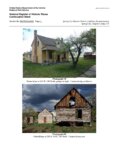
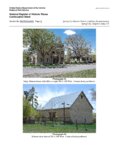
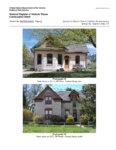
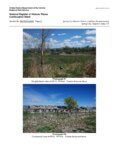
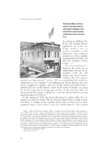
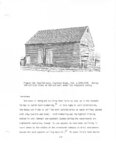
Show Virginia was in the throes of political revolution, the tobacco-based economy was faltering, people were experiencing both social and spatial alienation. From the midst of this turmoil emerged a housing tradition that was increasingly in control. Virginia folk housing in the late-eighteenth century became repetitive and generic. As individualism increased, personal expression in houses became more circumscribed. Glassie concluded that "in the Anglo-American world of the eighteenth · century the farther people were apart, the more alike their architecture became. 1113 The folk architectural tradition that Glassie found rising from the social chaos of Colonial Virginia provides an important and telling contrast to that found in the Sanpete Valley. Virginia builders, \ fearing change and finding themselves responsible for determining their own place in the world, chose an architecture of repetition and uniformity. Community in this case was expressed through an adherence to a common architectural form. Mormon carpenters, on the other hand, their world ordered and their social boundaries firmly established by their church membership, labored diligently on their temple but worked within a design tradition that was open and expansive. The diversity of the Sanpete Valley folk architectural tradition is, therefore, not surprising nor un-Mormonlike. It reflects the strong sense of community and purpose that characterized the Building of Zion. In 1854, Hans Jensen Hals could be pleased with his accomp1ishments. Along with a fellow Danish immigrant to the Sanpete Valley, Christian Kjarault, Hals had built a house of rock and gathered together furnishings. He had constructed a barn to shelter his animals and a granary to protect his seeds. Chosen to work with the Danish 299 |