| OCR Text |
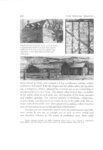
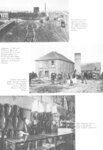
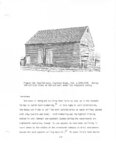
Show there were problems with the composition of the local clay. In the towns on the east side of the valley, clay deposits had a heavy lime content that required high and precisely controlled burning temperatures. Given the price of timber, it was impractical to fire bricks here until the 1880s when coal became available as a fuel. 2 A more easily processed clay was encountered along the western edge of the valley and early - brickyards were established in both Wales and Fountain Green. 3 In these towns, brick generally replaced adobe as a common building material by the 1870s. Despite attempts to find suitable alteratives, adobe was attractive as a cheap and readily available resource that served as a staple for house construction throughout the valley for much of the nineteenth century. The specific origins of Mormon adobecraft have been discussed at length elsewhere and it now seems to be generally accepted that the idea for using the large, unfired clay bricks came to the Saints from the southwestern United States, both indirectly through published emigrant guidebooks and directly through firsthand accounts by church members who served in New Mexico and California during the Mexican War. 4 It should be noted, however, that while adobe walling per se was not found in the Midwest or East, the basic technology involved in its production cannot be considered particularly exotic. To make bricks, fired or unfired, the builder had to follow certain steps: the clay had to be dug, mixed with sand and water in a pug mill, molded into bricks, and then dried. Bricks had to be dried in the sun or, depending on the climate, under some type of cover before firing because clay containing water will explode when heated. 5 Therefore, in making adobes, all that the builder acquainted with brickmaking needed to do was to leave off the final step, that of 251 |