| OCR Text |
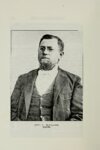
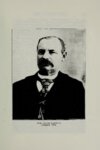
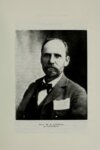
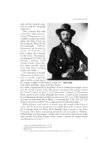
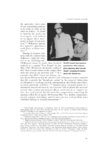
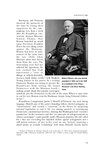
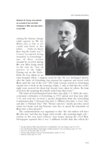
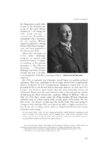
Show FRANK ASAHEL BECKWITH moved back to Evanston in 1902, where Beckwith worked for the Beckwith banking company. In 1907, Frank and Mary returned to Salt Lake City, where Frank found employment as a banker for the McCormick Banking Company and Utah Savings, Tracy Loan & Trust Company, a teacher at Henager Business College, and a secretary for C.C. Goodwin at Goodwin’s Weekly. By the time the Beckwiths made their 1913 move to Delta, they had added three children to their family—Athena Beckwith Cook, born 1900; Frank S. Beckwith, born 1904; and Florence W. Beckwith Reeves, born 1907. The family lived in Delta until 1917, when they moved to Oakley, Idaho, where Beckwith worked as a bank cashier. In 1919, the Beckwiths returned to Delta, and made the small town their permanent home.19 Upon his return to Delta, Beckwith discovered that the local newspaper, The Millard County Chronicle, was for sale, and jumped at the chance to change careers. The paper had been published since July 4, 1910, and its owner, Charles A. Davis, had become physically and mentally exhausted by the strain of producing it. Whether Davis himself sold his stock in the paper and his interest in the Linotype machine to Beckwith, or whether the bank repossessed the paper and then sold it to Beckwith is not clear, but either way, Frank Beckwith was now a newspaperman.20 When Beckwith took over the paper, its future seemed pretty secure. The alfalfa seed crops were record breaking, and the sugar factory in Delta assured a ready market for the sugar beets. Mines were operating in the area, and the railroad had announced plans to build a spur line to Sugarville (a farming area northwest of Delta) to haul beets to the sugar factory.21 Beckwith was able to convince Otto Reidman, a Swede who had worked for Davis, to stay on at the paper long enough to teach Beckwith’s eldest daughter, Athena, how to operate the Linotype and his son, Frank S. Beckwith, how to operate the handset.22 For several years, the Beckwiths self-produced the paper, with only the occasional added help of a few parttime workers and correspondents from nearby towns. Athena took most of the responsibility for the business aspects of the paper including social news gathering and selling advertisements, which left Beckwith free to do what 18 Mary was born on May 1, 1874, at Coalville, Summit County, the daughter of John William and Elizabeth Brierly Simister. During their entire married life she was very supportive of her husband’s many activities and assisted in the publication of the weekly newspaper until the business was sold in 1958. In Delta, she was active in civic and community affairs, including the American Red Cross, the Jolly Stitchers Club, and Betah Rebekah Lodge No. 47, I.O.O. F., at Delta. Mary died on February 2, 1965, in Delta. She was ninety years old and outlived her husband by fourteen years. She is buried next to him in the Delta City Cemetery; “Final Tribute Paid in Rites Friday for Mrs. Beckwith,” Millard County Chronicle, February 11, 1965. 19 “Frank A. Beckwith, Editor of Chronicle Since 1919, Dies of Heart Ailment,” Millard County Chronicle, June 14, 1951. 20 J. Cecil Alter, Early Utah Journalism (Salt Lake City: Utah State Historical Society, 1938), 65. 21 Hunsaker, “A History of the Millard County Chronicle,” 30. 22 Ibid., 37. 173 |