| OCR Text |
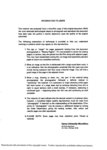
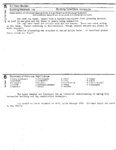
Show RIGHTS OF OWNERS TO COMMENT ON AND/OR OBJECT TO LISTING IN THE NATIONAL REGISTER OF HISTORIC PLACES Owners of private properties nominated to the National Register have an opportunity to concur with or object to listing in accord with the National Historic Preservation Act and 36 CFR 60. Any owner or partial owner of private property who chooses to object to listing may submit to the State Historic Preservation Officer a statement certifying that the party is the sole or partial owner of the private property and objects to the listing. Each owner or partial owner of private property has one vote regardless of the portion of the property that the party owns. If a majority of private property owners object, a property will not be listed. However, the State Historic Preservation Office shall submit the nomination to the Keeper of the National Register of Historic Places for a determination of eligibility of the property rather than a listing in the National Register. If you choose to object to the listing of your property, the objection must be submitted to Christopher Merritt (cmerritt@utah.gov), State Historic Preservation Officer, 3760 S. Highland Drive, Salt Lake City, Utah 84106, before the scheduled date of the Utah Board of State History meeting to consider the nomination. Other comments regarding the nomination of this property should also be directed to Mr. Merritt prior to the meeting date. A copy of the nomination, along with information on the National Register and the Federal and State tax provisions, is available at https://history.utah.gov/shpo/preservation/ or from the above address on request. If you support the listing of your property, you may send a letter or email to that effect to Mr. Merritt at either the mailing or email address listed above, though there is no requirement that you respond in support. Lack of a response from a property owner is considered a sign of support or lack of opposition. NATIONAL REGISTER--BENEFITS AND RESTRICTIONS What is the National Register? The National Register of Historic Places is the official federal list of properties that are significant in American history, architecture, archeology, and engineering. It was established by the federal government in 1966 as part of the National Historic Preservation Act. Why would someone list their property on the National Register? While listing on the National Register is primarily an honorary recognition of the historic or architectural significance of a property, owners also list their buildings to qualify for federal and/or state rehabilitation tax credits or grants, when available (see below). Listing on the National Register can also help educate the public and change a community's perception of its historic and cultural resources. Does listing limit an owner's property rights? Listing in the National Register does not interfere with a private property owner's right to alter, manage or dispose of the listed property. The owner is not required to restore or maintain the property or open it to the public. Local preservation ordinances, where present, may have some implication for a property owner. Local ordinances are not associated with the National Register. Who can nominate properties to the National Register? Any interested person can research and nominate any property to the National Register. The legal owner has the right to comment on or object to and prevent the listing of their private property. For historic districts, each property owner is provided an opportunity to comment on/object to the nomination. However, at least 51% of property owners must object to prevent the listing of a district. Is there money available for restoration? Limited matching grants are occasionally available for the preservation of properties listed on the National Register -- contact the State Historic Preservation Office for more information |