| OCR Text |
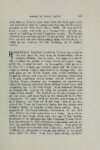
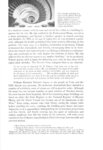
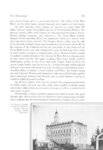
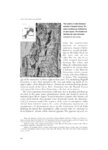
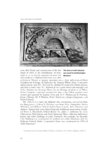
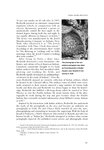
Show ee Americanization" of Carbon County 179 key aspect of the industrialization and economic grow7th of U t a h and the nation. Ethnic diversity raises questions of ethnicity and the adjustment of immigrants to life in America, U t a h , and Carbon County. Such questions center around concepts of "Americanization" and "accommodation." 1 T h e Carbon County experience affords an excellent opportunity to view ideas of adjustment, for in the main, the county functioned as Utah's Ellis Island, a principal entrance point for numerous immigrant groups, primarily southern and eastern Europeans, but including some thirty-tw 7 o different nationalities. T h e present investigation examines the reasons for Carbon County's attractiveness, its ethnic diversity, cultural maintenance in a new environment, and the virtual accommodation of ethnic groups to the existing society—all these factors helping to form a unique social milieu. T h a t this character forms a significant part of Carbon County's past and remains a cultural resource is visually exemplified by the Lynn Fausett murals in the Price Municipal Building. 2 Elements of county history are skillfully and colorfully painted by a native son with ethnic diversity very much a basic theme running throughout the work. Railroads and the developing coal industry beckoned laborers to the area now known as Carbon County in the late nineteenth and early twentieth centuries.' In 1882 the Denver & Rio Grande Western Railroad opened u p the vast coal deposits of Carbon County, and the railroad's coal subsidiary, the U t a h Fuel Company, by 1900 h a d become Utah's chief coal supplier. 4 Four main coal mining camps developed: Winter Quarters, acquired by the D & R G in 1882; Castle Gate, 1883; Clear Creek, about 1898; and Sunnyside, 1900.7' T h e demand for labor proved the major impetus for immigration. 1 O t h e r concepts relevant are those of the "melting pot," assimilation, acculturation, and cultural pluralism. A concise bibliographical essay dealing with ethnicity and "the making of Americans" is R u d o l p h J. Vecali, "European Americans: From Immigrants to Ethnics," in William H . Cartwright and Richard L. Watson, Jr., eds., The Reinterpretation of American History and Culture (Washington, D . C : National Council for the Social Studies, 1973) pp 8 1 112. 2 T h e Fausett murals and the Price Municipal Building are listed on the National Register of Historic Places owing to their historic and cultural significance. 3 O n M a r c h 8, 1894, Carbon County was officially formed, having previously been a part of Emery County. 4 T h o m a s G. Alexander, "From Dearth to Deluge, Utah's Coal Industry," Utah Historical Quarterly 31 (1963) : 237. Also consult Robert J. Athearn, " U t a h and the Coming of the Denver and Rio Grande Railroad," Utah Historical Quarterly 27 (1959) : 128-42. 5 Alexander, " U t a h ' s Coal Industry," p. 237; and James B. Allen, The Company Town in the American West ( N o r m a n : University of Oklahoma Press, 1966), pp. 169-72. Some discrepancy over founding dates does exist. |