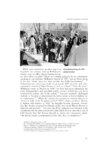
| OCR Text |
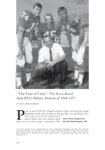
Show alumni newspaper, meanwhile, implied that the protests formed part of a communist conspiracy.110 Then on January 17, during a wrestling meet in Greeley, Colorado, some eighty Colorado State students staged a sit-in; a bomb threat temporarily emptied the hall.111 In early February, the BYU community received some good news: trustees approved a request from Melvin A. Givens, pastor of Salt Lake City’s all-black Deliverance Temple Church of God in Christ, for BYU’s A Capella Choir and Philharmonic Orchestra to participate in a special fundraising event. “I don’t agree with the policy or doctrine of The Church of Jesus Christ of Latter-day Saints,” Givens commented, “but I’m glad we could get together to show people that we’re not going to kill one another about it.”112 Equally important, BYU also announced the signing of the school’s first black athlete, football defensive back Ronald Knight from Oklahoma.113 “In the past,” explained coach Tommy J. Hudspeth, “we felt we should discourage the Negroes because we felt they would not be happy in the social situation here. . . . We are only 35 minutes from Salt Lake City where there is a Negro community, and we are setting up appointments and introductions there. . . . A lot of people are mad at me right now,” he continued, “because they feel we are giving in. . . . We are trying to show the other universities that we want to cooperate with them.”114 “Ron was the one that took the brunt of what we were trying to do in regarding to breaking the color lines,” Hudspeth later stated. “Ron was quite a young man. . . . He wanted to do things right and he was proud of his race. He was put under the gun quite a few times and he came out right because he was quite a man.”115 Knight played to his 1971 graduation. Positive developments were short-lived. BYU’s basketball game against Colorado State (Fort Collins) on February 5 became the scene of the most violent demonstration yet. As BYU warmed up, protesters gathered on the floor, yelled epithets, and made threatening gestures. While BYU players met in the locker room, the faculty advisor to Colorado’s black student association offered an opening prayer condemning those who “follow the dictates of men, and not of God.” 116 At half-time, while the BYU Cougarettes performed, more than one hundred students walked onto the court, surrounded the coeds, shouted curses, and made sexually aggressive 110 “Militants, Reds Attack Y, Church,” BYU Alumnus, February 1970, 4. Wilkinson, Diary, January 18, 1970. 112 “Y Groups Join Mahalia Jackson in Concert,” Daily Universe, March 3, 1970. 113 Board of Trustees, Minutes, February 4, 1970; “BYU Gets Negro Athlete,” Provo Daily Herald, February 3, 1970. 114 “Springville Chamber Hears Coach Talk about BYU Racial Situation,” Provo Daily Herald, February 16, 1970. 115 Ryan Thorburn, Black 14: The Rise, Fall, and Rebirth of Wyoming Football (Boulder, CO: Burning Daylight, 2009), 70–71. 116 Wilkinson described the prayer as “not an invocation at all but a tirade against the BYU and the Mormon Church, a very inflam[m]atory speech which set the stage for what followed.” Wilkinson, Diary, February 5, 1970. 111 222 |