| OCR Text |
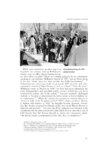
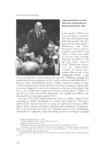
Show ATHLETIC PROTESTS and BYU officials screened a documentary on “the Negro and BYU”; the reaction was not uniformly positive, however, and the film was shelved.143 Student government officials at Western Michigan University voted to boycott the school’s September 19 football game. The game proceeded.144 In early October, six students from the University of Arizona toured BYU. They found “nothing to indicate that there [is] any more or less racism present than at any other school,” and that BYU was an “isolated institution whose members simply do not relate to or understand black people.”145 Only minor protests accompanied Arizona’s October 10 game with BYU. BYU’s new student body president, Brian Walton, decided to address the issue of racism head-on that fall as part of his activist-oriented social agenda. He convened on October 28, 1970, a special convocation to discuss “BYU’s relations with other schools” and “our internal situation with regards to minority groups and their treatment.”146 Quoting James Baldwin, Martin Luther King Jr., Claude Brown, the Book of Mormon, the New Testament, BYU religion teacher Hyrum Andrus, and LDS official Hugh B. Brown, Walton announced the formation of a special committee on blacks at BYU, including recruitment. “Currently, we are abysmally ignorant of the real situation and which alternatives are viable and which are not,” he said.147 Walton’s initiative was not universally embraced. “The . . . suggestions of . . . more Negro students, blacks studies programs, etc. are uncalled for,” wrote BYU religion professor Rodney Turner. “Our worst enemies are those well-meaning but misguided members of the Church who keep the pot of contention boiling because they will not MIND THEIR OWN STEWARDSHIPS.”148 Wilkinson, on the other hand, agreed that Walton’s issues “cannot be lightly laughed off,” but worried that Walton might attempt to “determine the policies of the institution . . . I think we better check this before it gets underway,” he told administrators.149 Walton’s presidency soon became mired in controversy, and only a portion of his ambitious agenda came to fruition.150 While by no means the only negative reaction to Walton’s call for dialogue, Turner’s letter represented an increasingly 143 Wilkinson, Diary, September 1 and September 2, 1970; Wolsey, “Confessions,” 78–79. “WMU Votes BYU Boycott,” Salt Lake City Deseret News, September 11, 1970; Wolsey, “Confessions,” 71–79. 145 “BYU Not ‘Racist,’” Daily Universe, October 5, 1970; see also “BYU Friendliness a ‘Front?’,” Daily Universe, October 19, 1970. 146 “Brian Walton Announces Studentbody Convocation,” Daily Universe, October 23, 1970. 147 Brian Walton, “BYU and Race: Where Are We Now,” ASBYU Convocation, October 28, 1970 (Provo: Brigham Young University, 1970), Perry Special Collections, and “A University’s Dilemma: B.Y.U. and Blacks,” Dialogue: A Journal of Mormon Thought 6 (Spring 1971): 31–36. 148 Letter, Daily Universe, October 27, 1970, emphasis in original. 149 Wilkinson, memorandum to Ben E. Lewis, Robert K. Thomas, and Heber G. Wolsey, November 3, 1970, Wilkinson Papers. 150 Today Walton believes that the “dialogue we started with other schools and the black students there . . . really did make a difference.” Brian Walton, e-mail to Gary Bergera, February 15, 2012. 144 227 |