| OCR Text |
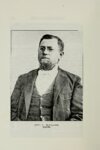
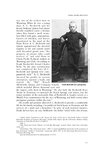
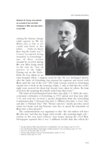
Show WINTER 2013 UHQ pp 4-90_UHQ Stories/pp.4-68 12/5/12 9:38 AM Page 26 uTAH HISTORICAL QuARTERLy After finding employment in one of the mines, Riddell promptly joined and took an active role in the affairs of the Eureka Miners’ Union No. 151, which was affiliated with the Western Federation of Miners (WFM). By September 1905, he had moved up the union ladder to become vicepresident, and, six months later, on March 9, 1906, he was elected president. Riddell served in this capacity until September 7, 1906, and he was subsequently chosen to represent the union at the WFM national convention scheduled for June 1907 in Denver, Colorado. The promising newcomer, however, soon proved to be a flash in the pan. A month before the convention, in May 1907, Riddell suddenly left town, without settling with creditors or leaving his forwarding address. Like fool’s gold, he was not what he had pretended to be. Although he had posed as a hard-rock miner, Riddell was in fact an undercover Pinkerton detective, known as “Agent No. 36,” who had been hired by the Tintic Mine Owners’ Association to spy on the union.2 Riddell and other Pinkerton detectives across the United States were forced to take cover after they were publicly identified and denounced as labor spies by a disgruntled former Pinkerton National Detective Agency employee, Morris Friedman, who had worked as a stenographer in the agency’s Denver office. In 1907 Friedman published an exposé titled The Pinkerton Labor Spy that detailed the company’s use of its agents to “disrupt, subvert, and spy on the Western Federation and other unions.”3 During the late nineteenth and early twentieth centuries as unions struggled to organize various parts of America’s labor, one strategy used by businessmen, railroad owners and mine moguls to combat unionization was to employ undercover private detectives to infiltrate unions and to monitor their activities. As a result, during this period, private detective agencies experienced unprecedented growth and prosperity. In 1899 the Pinkerton agency hired fifty-eight new detectives and an additional sixty-five the next year. Within a few years, the agency also opened twelve new offices, increasing its national total to twenty. By 1904 New York City alone had seventy-five different agencies and Chicago and Philadelphia were home to approximately thirty each.4 The spies reported on employees’ attitudes and work performance, 2 Eureka Reporter, September 15, 1905; March 9, 1906; May 17, 1907. The Pinkerton National Detective Agency, which was founded by Allan Pinkerton in Chicago in 1850, is a private security guard and detective agency. 3 Morris Friedman, The Pinkerton Labor Spy (New York: Wilshire Book Co., 1907); J. Anthony Lukas, Big Trouble: A Murder in a Small Western Town Sets off a Struggle for the Soul of America (New York: Simon & Schuster, 1997), 687. 4 Lukas, Big Trouble, 83-84. In 1907, there were three detective agencies listed in the R. L. Polk & Co. Salt Lake City Directory, but only one agency, the Western Detective Agency, appears to have had a local office, which was listed at 400-401 Herald Building. The other two agencies, the Pinkerton National Detective Agency and the Thiel Detective Service Company, were listed as having offices in Denver. However, according to an article in the Salt Lake Herald, dated October 27, 1906, the Thiel Agency of St. Louis filed a notice with the county clerk, announcing its intent to open a branch office in Salt Lake City. 26 |