| OCR Text |
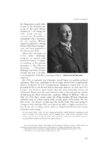
Show GETTYSBURG REUNION the former soldiers—“Privates, Lieutenants, Captains, Majors, Colonels, Generals, [and] Governors, all look alike [at] Gettysburg.”85 Frequently after Confederate and Union veterans became acquainted, there was talk of joining the United Confederate Veterans and the Grand Army of the Republic into a single veterans’ organization called the United Veterans of the United States. The idea remained just talk, though, as no direct action was taken to do so after the reunion.86 Utah’s reunion commission chair, Lucian H. Smyth, reported that “attendance at the battlefield was beyond all expectations. The streets of Gettysburg were so jammed that it was almost impossible to walk. On the night of July 3, about 3000 automobiles got into the crowd when the fireworks display was shown at Little Round Top and all the roads were so blocked that it took several hours to clear them for traffic.” Smyth added that “the reunion was a big success, and one of the best lessons ever put before the world in showing the possibilities of a self-governing people.”87 The final day, July 4, was envisioned as “the biggest day of all” with the chief justice of the United States presiding over ceremonies in the big tent. President Woodrow Wilson addressed the veterans during a one hour visit to Gettysburg. After racing “across Pennsylvania and New Jersey at a speed sometimes approaching seventy miles an hour,” Wilson (who was the son of Confederate, Joseph Ruggles Wilson, and the first Southerner elected president since Andrew Johnson assumed the presidency upon the death of Abraham Lincoln) declared to the assembled veterans: “We have found one another again as brothers and comrades, in arms, enemies no longer, generous friends rather, our battles long past, the quarrel forgotten—except we shall not forget the splendid valor, the manly devotion of the men then arranged against one another, now grasping hands and smiling into each other’s eyes.”88 The veterans generally received the president’s speech with a collective yawn; as the New York Times put it, the speech “did not inspire its hearers to [a] very enthusiastic response.”89 The original reunion schedule called for the president to lay the cornerstone of a Gettysburg peace monument, but sufficient funding had not been obtained.90 Later that evening several hundred Confederate veterans 85 “Cared for at Gettysburg,” June 29, 1913. “Defy Gettysburg Heat,” July 2, 1913. 87 “Hot Car on Hot Day,” July 10, 1913. 88 “President Proceeds from Gettysburg to Summer White House,” Salt Lake Herald-Republican, July 5, 1913 (first quotation); Report of the Pennsylvania Commission, 174 (second quotation). 89 “Mr. Wilson at Gettysburg,” New York Times, July 5, 1913. 90 “Raise Funds,” April 17, 1913; “Orders to G.A.R.,” June 8, 1913. “The plan for the monument fell through,” and the cornerstone was not laid as planned. The idea for a peace monument was revived soon after the reunion by Colonel Andrew Cowan, a captain of the First New York battery at Gettysburg. Cowan presided over a committee that “went to Washington with a view of securing the introduction in Congress of a bill providing for the erection of a peace monument.” “Weary Veterans Silently Depart from Gettysburg,” Salt Lake Herald-Republican, July 6, 1913. As explained in the closing paragraphs of this essay, Cowan’s petition in Washington was successful. 86 285 |