| OCR Text |
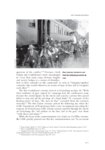
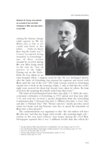
Show ELECTION OF 1856 officers still in the territory as well as those who might come in their place. “Why not kick them out of the Territory[,] say You,” Young rhetorically wrote to his friend Thomas L. Kane about the men who had been so busy with their conspiratorial letter-writing. “That’s just it, we intend to, the very first opportunity. We are resolved that their United States’ official dignity shall no longer screen them.”89 Young also told Smith and Bernhisel that any new batch of unfit federal appointees would be turned out “as fast as they come let the consequences be what they may.” The saints were “determined to claim the right of having a voice in the selection of our officers, he said, and if the politicians in Washington were unwilling to listen,Young wanted the memorials of the Utah legislature published in the national press.90 While historians have recently argued that these petitions and Young’s anger were keys to precipitating the Utah War, a great deal lay behind both.91 Much had changed in 1856. While the year had begun with the Mormons hoping that Utah might gain statehood and become an equal partner in the Union, these plans were in ruins twelve months later. An American public had found deeper fathoms of mistrust and objection against the Mormons. A new national political alignment had taken hold that involved a surging and moralistic Republican Party, anxious to end old constitutional theories about local decision-making in the west. As it turned out, while Representative Justin S. Morrill did not have the votes to pass his anti-polygamy bill, he did persuade the House in January 1857 to pass a resolution requesting the President to tell Congress whether “any resistance, organized or otherwise, has been made, or is to be apprehended, against the official action or administration of the United States territorial officials in the Territory of Utah.”92 Outgoing Franklin Pierce quietly pocketed the request. This was one dangerous baton best passed on to a successor. There is no way of knowing what Buchanan thought of the Mormons as he made his way to the Lancaster railroad station in February 1857. He did not keep a diary, and his letters were as circumspect as usual, which left close friends and later historians guessing. Of course, he knew of the Republican success with the “relics” of barbarism, and he knew what the newspapers were saying about the Mormons—and he may have known something about the reports that had come to the Pierce Administration. Buchanan went to great pains to keep himself informed, and he had a wide network of friends inside and outside of the government. He must have felt an obligation to preserve the Democratic Party as well as the Union, and 89 Brigham Young to Thomas L. Kane, January 7, 1857, Letterbook C, Young Office Files, Church History Library. 90 Brigham Young to George A. Smith and John M. Bernhisel, January 3, 1857, Letterpress Copybook 3:259,Young Office Files, Church History Library. 91 William P. MacKinnon, At Sword’s Point, Part I, 65-74, 100-102; Bigler and Bagley, The Mormon Rebellion, 105-7. 92 Cited in Poll, “The Mormon Question, 1850-1865,” 68. 131 |