| OCR Text |
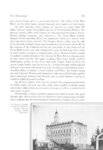
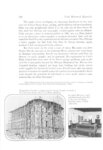
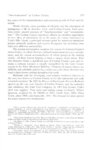
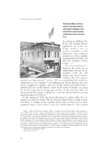
Show WINTER 2013 UHQ pp 4-90_UHQ Stories/pp.4-68 12/5/12 9:38 AM Page 62 uTAH HISTORICAL QuARTERLy displays Beaux-Arts influences of rigid symmetry, perfect proportions, and columned entries. The mansion was built of reinforced concrete faced with “cream colored Manti stone that yields itself delicately to the finest touches of the artist’s chisel. The vestibule is also of Manti stone inlaid with mosaics.”29 The mansion, sometimes referred to as the “Parthenon of the West,” consists of fifty-five rooms including a Louis XVI Ballroom. A series of arched window bays are separated by stylized Ionic columns. Intricately carved limestone forms the cornice, tops of the columns, and spaces between window arches and balconies above.30 About two hundred miles south of San Francisco along the Pacific coast, a second, larger, more magnificent mansion with equally spectacular views of the Pacific Ocean was begun for William Randolph Hearst, a leading newspaper publisher. The mansion sits on a hill overlooking San Simeon Bay and offers some of the most impressive views of the central California coast. Architect Julia Morgan designed the Hearst mansion also called the Hearst Castle or Casa Grande at Hearst’s 240,000 acre ranch at San Simeon, California. Morgan, like Applegarth, was trained at the Ecole Des Beaux-Arts in Paris, France. The Hearst Castle designed in the Renaissance style of southern Spain was constructed of reinforced concrete and faced with Sanpete oolite limestone. Four stairway towers are modeled after a church in Ronda, Spain. The mansion has fifty-eight bedrooms, fifty-nine bathrooms, and many other rooms. Construction began in 1919 and was finally completed in 1947. In 1927, limestone from Sanpete was selected for the facing of the main building.31 The Park (Administration) Building at the University of Utah, located on the hill overlooking the Salt Lake Valley at the top of Second South Street is another building constructed with Sanpete oolite limestone. The Beaus-Arts and Neoclassical styles inspired architects S. C. Dallas and William S. Hedges of the architectural firm of Cannon, Fetzer, and Hansen.32 Broad expanses of plain walls, quiet roofline, square window bays, 29 “New A. P. Spreckels Home Splendid Mansion,” San Francisco Call, May 25, 1913. Bernice Scharlach, Big Alma San Francisco’s Alma Spreckels (San Francisco: Scottwall Associates, 1990), 34, 40; Sally B. Woodbridge, John M. Woodbridge, Chuck Byrne, San Francisco Architecture (Berkeley: Ten Speed Press, 2005), 144; Mitchell Schwarzer, Architecture of the San Francisco Bay Area: A History and Guide (San Francisco: William Stout Publishers, 2007), 107. 31 ”We finally took the bull by the horns and are facing the entire main building with a Manti stone from Utah, about the color of Caen stone or of the similar Spanish stone most of the carved Gothic ‘antiques’ have been made of.” Julie Morgan to Arthur Byne, Spanish expert and antiquarian, October 31, 1927, Julia Morgan Collection, Special Collections, Robert E. Kennedy Library, California Polytechnic State University, San Luis Obispo, California. See Victoria Kastner with photographs by Victoria Garagliano, Hearst Castle: The Biography of a Country House (New York: Harry N Abrams Books, New York, 2000), 132; Sara Holmes Boutelle, Julia Morgan Architect (New York: Abbeville Press, 1988), 188-98. 32 Ralph V. Chamberlin, The University of Utah: A History of its First Hundred Years 1850-1950 (Salt Lake City: The University of Utah Press 1960), 242-43; United States Department of Interior, National Park Service, National Register of Historic Places, Inventory Nomination Form Number 78002682, University of Utah Circle, URL http://pdfhost.focus,nps.gov/docs/NRHP/text/78002682.pdf [ accessed May 15, 2012 .] 30 62 |