| OCR Text |
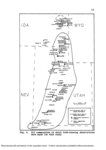
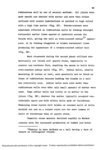
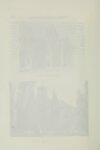
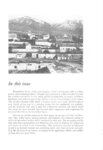
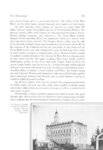
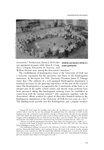
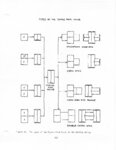
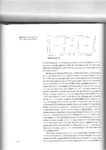
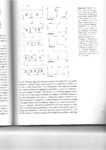
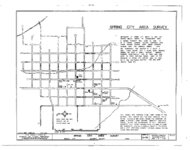
Show outlined his plan for the City of Zion, a plan (figure 4) which may be summarized as follows: The city was to be a compact, nucleated farming community, one mile square, and divided into ten acre blocks. These blocks were then subdivided into house lots of equal size with the stipulation that each lot not have more than one dwelling. The houses were to have a uniform setback of 25 feet, be constructed of brick and stone, and have shade trees, orchards, and garden plots located around them. The central blocks were reserved for public buildings and temples; of the latter there were to be 24. The houses were a11 to be contained within the city limits, with farm acreage and barns located outside at a distance not too great to prohibit easy access. The city was designed for a population of 15 or 20 thousand people and once this number had been reached, a new city was to be laid off in a similar fashion. The City of Zion described by Smith was never fully implemented, but it served as the basic model for Mormon communities in the West. The Mormon town, especially as it surfaced in the Great Basin, took on a structure which closely followed the spirit if not the letter of the prophet's instructions. 51 Tabernacles, or meeting houses, normally replaced the temples on the central blocks. temples were constructed in the years before 1900. In Utah, only four Serving the ritual rather than congregational needs of the religion, the temples were monumental structures whose size and cost often transcended the scale of the town itself. 52 In practice, the Mormon western town deviated in other ways from Zion's Plat. The actual number of lots in a block varied (ranging from four to more than a dozen) and barns and other farm buildings were constructed in the town rather than outside on the 49 |