| OCR Text |
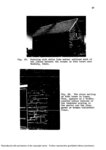
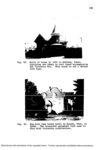
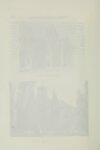
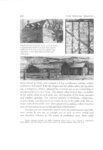
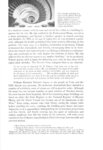
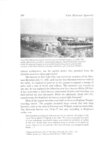
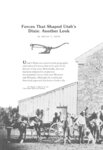
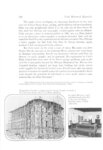
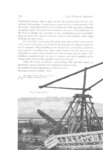
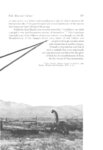
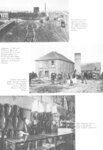
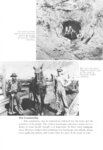
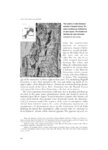
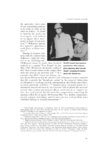
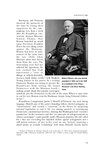
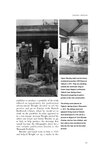
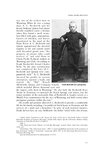
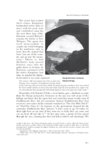
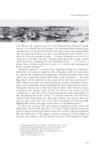
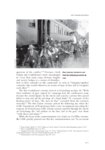
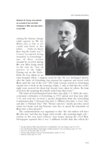
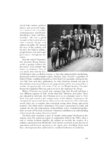
Show WINTER 2013 UHQ pp 4-90_UHQ Stories/pp.4-68 12/5/12 9:38 AM Page 49 SANPETE OOLITE LIMESTONE limestone, expanded in volume and caused exfoliation of the limestone building blocks.8 The oolite limestone was easily located by quarry men due to the extensive exposure and highly visible white color along the base of the inclined rock layers. Once located, the limestone was relatively easy to quarry compared to other types of rock. For example, in 1904 the cost of quarrying granite was estimated at $4.53 per cubic yard compared to the cost of limestone at $0.74 per cubic yard.9 The limestone was quarried and split to dimensions ready for stonecutters to begin dressing the surface. Quarrying began by first excavating a working face in the quarry. Next a channel was excavated at the end of this face and overlying shale or unsuitable rock was removed to expose three faces of the stone. Then, the art of quarrying begins by taking advantage of joints and natural planes of weakness in the rock. In the oolite which is a sedimentary rock, bedding surfaces form one set of weakness planes, and two sets of joints perpendicular to bedding that may be visible only to a trained eye form additional weakness planes. The rock may be quarried into large, rectangular-shaped blocks along such weakness planes. The rock was quarried using only hand tools and the plug-and-feather technique. First, holes were drilled by hand along one of the joint sets. Then a “feather” was inserted. The feathers were short pieces of half-round iron, and the rounded side fits the curved sides of the drilled hole. The plug was a wedge that fits between two feathers. The wedges were hammered with successive hammer blows to tighten them, and then each plug (wedge) was struck with one or two hard blows in succession, waiting a suitable length of time between each set of blows to allow the strain to accumulate in the rock. The ring of the hammer blow against the wedge told the quarry man that the strain was the same in each wedge. The depth of the drilled holes and the spacing along the joint were determined by the thickness between adjacent bedding planes of the rock that were being quarried.10 Once broken loose from the quarry working face, the quarried stones were moved on to rollers then loaded onto horse-drawn wagons using a derrick. In the photograph taken about 1901, six quarry men and a dog are shown in the foreground of the working Ephraim quarry. The overburden waste of shale and thin-bedded limestone has been removed with the help of the man at the far right and his wheelbarrow. The man at the far left foreground stands on the upper limestone surface where feather and 8 Carl J. Christensen, Sanpete Oolite Limestone as a Building Material, Bulletin No. 140 of the State School of Mines, University of Utah (Salt Lake City: Utah Engineering Experiment Station, University of Utah, 1967), 1-30. 9 Hulbert Powers Gillette, Rock Excavation Methods and Costs (New York: M. C. Clark, 1904), 209-13. 10 Mary Gage and James Gage, The Art of Splitting Stone (Amesbury, MA: Powwow River Books, 2005), 36-44, 58-62. 49 |