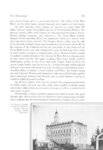
| OCR Text |
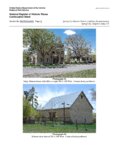
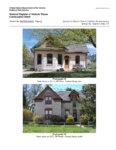
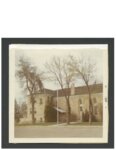
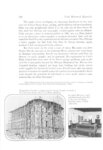
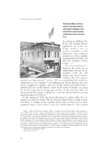
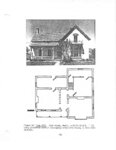
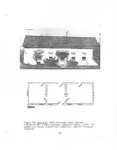
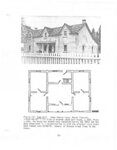
Show United States Department of the Interior National Park Service OMB No. 1024-0018, NPS Form National Register of Historic Places Continuation Sheet Section No. 8 Page 11 Spring City Historic District (Addition Documentation), Spring City, Sanpete County, UT among the residents, such as a ropemaker, a traveling salesman and a trombone musician. Many men, in addition to agricultural workers, were employed outside of the town’s boundaries, in mines or the canyons, as freighters or railroad workers. The historic houses in Spring City represent the economic contributions of women in the town’s economy. Four homes on or near Main Street were operated as hotels intermittently with female proprietors: Accord, Frantzen, Baxter, and Allred. Among those working from home in this period were seven dressmakers, two milliners, Mable Nelson, a weaver, and Ellen Bunnell, who manufactured leather gloves. Women also works in the health and service industries. Mary Meek was a nurse on the 1870 census, Mary Pederson was a midwife in 1880. In 1910, eight women worked as store clerks. The Christensen sisters were employed as a bookkeeper, a hotel clerk and a telephone operator. Mrs. George Maxfield was the city treasurer. Following her divorce, Sarah Ellen Hyde was the general contractor for her patternbook Victorian house at 185 S. 200 East, built in 1900 by local builders. 68 Spring City appears to have an abundance of schoolteachers, both male and female, over the years. There are three extant historic education-related buildings in the district: the old Rock School (1876), the Spring City School (1899), and the Spring City Junior High (1916). 69 The most architecturally significant is the three-story Spring City School, the first in Spring City completed after Utah created a public school system in 1890. This Victorian Eclectic school was designed by Provo architect Richard C. Watkins. The building is architecturally notable for its polychromatic brick masonry, arched central entry with a second-floor balcony, stepped parapets, and corbelled chimneys. The Spring City School was listed on the National Register of Historic Places on November 14, 1978 (NRIS# 78002691). The school remains the only property individually listed within the boundaries of the historic district. 70 After the school closed in 1957, the building was used for storage. In 1972, one observer mused, “To see Spring City today one wonders how it ever supported such a large pretentious school.” 71 A restoration of the building was completed in 2017 for use as the current city offices by the Friends of Historic Spring City. Civic Improvement and Specialized Agriculture Period (1912-1956) The Spring City Junior High School was the only public building constructed during the Civic Improvement and Specialized Agriculture Period (1912-1956). The one-story brick building, completed in 1916, features a neo-classical entry. Its historic integrity has been somewhat compromised by a 1990s fire station addition to the east when the building was used as a city hall. Although there are fewer architecturally significant buildings from this period, all examples represent the Americanization of commercial and domestic architecture in rural Utah in the twentieth century. The Osborne Mercantile at 76 S. Main Street, built circa 1925, is similar to older one-part blocks, but the façade is clad in the distinctive red-purple face brick that was popular throughout Utah in the 1920s. The three other commercial buildings on Main Street from this period are all from the automobile industry. Strate’s Garage, built in 1927, is across the street from Osborne’s Mercantile. The oldest extant gas station is located at the north end of the business district, the Aiken Service Station, built in 1924, although the non-functioning pumps were moved from the demolished Baxter service station that came from farther south on Main Street. The Thompson service station, was built in 1949 of concrete block, and is still an operating Sinclair station today. The convenience store portion was Spring City History District, Site #89 Form. Two other early schools were demolished decades ago. The Presbyterians and Methodists had schools in Spring City (now demolished). The living quarters for the Methodist Church ministers and teachers, built in 1889, is extant. 70 The only other individually listed property with ties to Spring City is the Crawford, Charles, Farmstead (NRIS #80003956), The farmstead is located approximately two miles south of the boundary of the historic district. 71 Stephen L. Carr, The Historical Guide to Utah’s Ghost Towns, (Salt Lake City, Utah: Western Epics, 1972, revised and enlarged edition, 1987): p. 100. 68 69 |