| OCR Text |
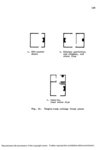
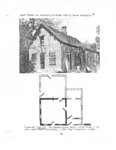
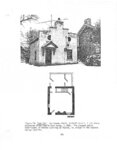
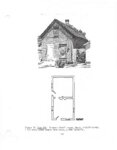
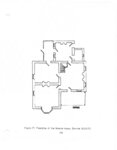
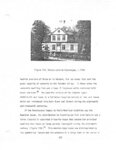
Show Little Scandinavia 159 For instance, a story from Mayfield tells that a husband of several wives would put the key in the lock of the door of the wife whose turn it was to share his company that night; the other wives would often sneak the key out and put it in their own doors, thus stealing extra turns. 31 Still other stories actually end in physical conflict. Consider the following: M o t h e r used to tell this story about a prominent family w h o lived in Ephraim. T h e first wife of this fella had quite a few children. She was heavy set and not too attractive. Later, her husband married a younger, more attractive girl. Now, their house was set u p in such a way that to get to the kitchen you had to go through the bedroom. O n e day the first wife h a d to pass through the bedroom, and she was carrying some slop for the pigs. As she passed by the bed her husband threw back the covers, gave his second wife a nice swat and said to the first wife, "See, Mary Ann, what a nice shape she has!" Well, it m a d e the first wife so m a d that she threw the pig slop on both of them. 3 0 The polygamy stories circulating today are usually determined by the attitudes of the families towards polygamy. Those families that view that peculiar institution in a favorable light tell stories that reflect positive images of the institution; these stories, in turn, help reinforce their belief that polygamy was good. Just the opposite is true in families that view polygamy negatively. Stories like the pig-slop narrative are particularly interesting. In these stories, the first wife appears in a favorable light, the second wife as an interloper, and the husband as a callous individual with little regard for his first wife's feelings. In the stories, the first wife comes out victorious. Most of these stories are told by women. However well polygamy may have worked when it was practiced, many modern Mormon women evidently identify with the first wife in these accounts, applauding her way of handling a problem they themselves would not want to live with and vicariously enjoying the victory of the mistreated first wife.36 One group of polygamy stories enjoyed by most Mormons, even those who do not like polygamy, are the stories about shrewd polygamists who outwit legal authorities bent on putting them in jail. In these stories the legal authorities appear as rather witless dupes and the polygamists as clever tricksters who manage to continue practicing polygamy despite the prohibition against it. Like the stories about outwitting Indians, these narratives probably have given their tellers a feeling of superiority over 34 Olga Sorensen, Mayfield, Utah, 1930. Peggy Hansen, Salt Lake City, Utah, 1971. 3,5 See William A. Wilson, "Folklore and History: Fact amid the Legends," Utah torical Quarterly 41 (1973) : 55-57. 33 His- |