| OCR Text |
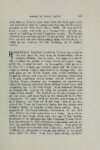
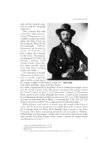
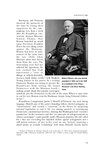
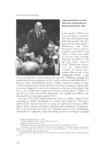
Show GETTYSBURG REUNION veteran “uttered [a] slur upon the sacred memory of the martyred Lincoln.” A Union veteran present “jumped to his feet and began to defend the martyred President and berated his detractors. . . . Knives were out in a second and the room was thrown into an uproar. Women fled for the doors and crowded to the windows ready to jump to the street below.” The fight ended as quickly as it began, and “the men responsible for it all had disappeared.” Several doctors renewed their unheeded call to “have the Gettysburg saloons closed during the remainder of the celebration.” An editorial in the Salt Lake Herald attributed the stabbings to a combination of humidity, alcohol, and the extreme heat that “might well addle even sober brains.”68 Fortunately, incidents such as these were the rare exception, rather than the rule, throughout the reunion. Commenting on that incident, James L. Welshans, a Union veteran from Ogden, wrote that “Every ex-Confederate with whom we since have talked, expressed sorrow and disappointment over this act.” He further observed that “Much has been said lately about this event [the reunion] having the effect of doing away with animosities, bitter feelings and hatred between the northern and southern sections of our country, implying that such have been largely existant [sic]. We wish to protest against this implication and insist that no such malignant spirit has existed between the ex-soldiers of the blue and the gray, except with but very few obstinate cranks.”69 Eighteen governors participated during Civic Day on July 3. A federal delegation led by Vice President Thomas R. Marshall also included Champ Clark, Speaker of the House of Representatives, twenty-one representatives, and nine senators. 70 As evidence of the high esteem and “warmth of gratitude this great organization feels towards the Utah senator,” U.S. Senator Reed Smoot received a special invitation from the national headquarters of the Grand Army of the Republic to attend the celebration as its guest. Smoot traveled to Gettysburg on Monday, June 30, and participated in several days of reunion activities before returning to Washington, D.C.71 Speaking to veterans in the big tent, Marshall noted that expectations for the reunion had been greatly exceeded and “it would be in vain to speak of 68 “Seven Men Cut in a Fracas in Gettysburg Hotel,” Salt Lake Herald-Republican, July 3, 1913. “Ogden Veterans,” July 9, 1913. 70 “Pickett’s Charge,” July 4, 1913. 71 “As a member of the Committee on Pensions, Senator Smoot took an especial interest in the necessary care of the nation’s veteran defenders and their widows. . . . He was largely instrumental in securing the improvements made of recent years in the pension laws.” Hon. Reed Smoot Senior United States Senator from Utah: His Record in the Senate (Salt Lake City: Chas. A. Morris, 1914), 7; “A Signal Honor,” Salt Lake Herald-Repubican, June 30, 1913. The Report of the Pennsylvania Commission, 173, lists Smoot as a “Guest of Pennsylvania.” In April 1913, Smoot led a successful fight in the Senate to retain the jobs of “a number of civil war veterans who [were] employees and former employees of the Senate” who “Democrats [were] removing and dismissing.” See “Smoot to Lead Fight,” April 15, 1913, “Smoot to Fight for Civil War Veterans,” April 15, 1913, and “Base Ingratitude,” April 17, 1913, Salt Lake Herald-Republican. 69 281 |