| OCR Text |
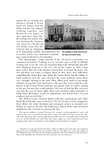
Show UTAH HISTORICAL QUARTERLY the Midwest and New England, who entered Kansas to cast opposing ballots. Soon Kansas had rival legislatures, rival governors, and rival capitals—and a rising tide of violence that mocked the ideals of democracy and fair play. After seven hundred pro-slavers took the abolitionist stronghold of Lawrence, Kansas, and burned its “Free State Hotel” and broke up two newspapers, Massachusetts Senator Charles Sumner fur iously denounced the “Crime Against Kansas” on the floor of the upper chamber. Sumner’s violence with words was met with actual physical violence: Preston Brooks, a South Carolina congressman, beat Sumner with a heavy cane while Sumner sat at his desk in the Senate chamber, inflicting injuries from which Sumner never fully recovered. Two days later the half-crazed abolitionist, John Brown, along with a small band of like-minded men, butchered five pro-slavery men in Kansas. Brown split open the head of one man and chopped his arms from his body.15 In a wild response, four hundred Missourian “Border Ruffians” leveled the town of Osawatomie, Kansas, and killed one of Brown’s sons. As the election of 1856 approached, the cycles of voting fraud, property damage, and killing were transforming the territory into what Horace Greeley and the New York Tribune called “Bleeding Kansas.”16 All these issues and events were prologue to the “Mormon issue.” Most Americans knew at least something about the Mormons, whose church had been established in 1830 in upstate New York and had taken the formal name of The Church of Jesus Christ of Latter-day Saints. Americans generally knew, too, strife seemed to go hand-in-hand with these people. They had been driven from New York to Ohio and then to Missouri, Illinois, and most recently to Utah Territory. Buchanan had more than a nodding acquaintance with them. In 1839 he had met with President Van Buren and Joseph Smith, the Mormon founding prophet, when Smith came to Washington to ask for help after his people had been forced to leave Missouri. Buchanan was Secretary of State when the government enrolled five hundred Mormons to serve in the Mexican War. He had also donated to the national relief campaign to aid the Mormon refugees strung across the plains of Iowa during their “exodus” to Utah.17 The Mormons continued to make news once they settled in Utah. The “Runaways” created headlines with their claims that Young was disloyal and was a polygamist. In 1852 the Mormons officially admitted their plural marriage. The following year Indians in central Utah killed U.S. Army 15 Affidavits of Mahala Doyle and John Doyle in testimony attached to minority report, “Howard Committee,” as cited in Albert J. Beveridge, Abraham Lincoln, 1809-1858, 4 vols. (Boston and New York: Houghton Mifflin Company, 1928), 4:43. 16 Nicole Etcheson, Bleeding Kansas: Contested Liberty in the Civil War Era (Lawrence: University of Kansas, 2004); Thomas Goodrich, War to the Knife: Bleeding Kansas, 1854-1861 (Mechanicsburg, PA., Stackpole Books, 1998). 17 Davis Bitton, “American Philanthropy and Mormon Refugees, 1846-1849,” Journal of Mormon History 7 (1980), 69. 114 |