| OCR Text |
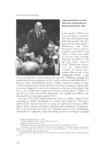
Show UTAH HISTORICAL QUARTERLY . . . against The Church of Jesus Christ of Latter-day Saints; these demonstrations are against the principle of freedom of religion; these demonstrations are against the principle of constitutional government in the United States.”124 “These people,” coach Stan Watts echoed, “aren’t after us. They’re after America.”125 “The way to destroy the Church,” suggested Hartvigsen, “is to destroy the fine intercollegiate athletic program at BYU.”126 “This is a time of testing,” Harold B. Lee told students later that fall, “the like of which the Church has never gone through.”127 Two days after the Colorado State game, BYU faced the University of Wyoming, where ten uniformed policemen stood in each corner of the court.128 From the stands, demonstrators waved signs and then turned their backs to the American flag while the U.S. anthem played. Several games later, in El Paso, a scattering of signs and banners greeted BYU.129 In Albuquerque, some students refused to stand or turned their backs during the national anthem. Before play started, protesters tossed raw eggs, lettuce, and other items onto the court. Liquid-filled balloons burst as they hit the floor. As the floor was cleaned, sections of the wax finish peeled off. Some forty minutes later, play started; BYU lost 68 to 82. Finally, in March, BYU played its last game of the season—losing once again, this time to Utah State. Watts had endured his worst season ever, while Wilkinson noted in his diary that “these disturbances” had a “marked effect on our players.”130 That same semester, on January 20, 1970, BYU gymnastics had competed against the University of Washington in Seattle. During the match, twenty protesters threw catsup, salad oil, and eggs onto the mat; water was tossed in the face of Washington’s coach. After the meet, police accompanied BYU’s team from the building. Washington’s athletic director decided to review all future relations with BYU. On March 8, after a month of demands, demonstrations, sit-ins, and building occupations, Washington’s executive vice president announced that the university, after fulfilling its existing obligations, “has no plans to enter into any additional contracts for intercol- 124 Daniel H. Ludlow, “Our Divine Destiny—A Third Dimension View,” March 17, 1970, in BYU Speeches of the Year, 1969–70 (Provo, Utah: BYU Extension Division, 1970), 9. 125 “Protest Not Against Y Says Watts,” Daily Universe, March 11, 1970. 126 BYU Public Relations Coordinating Council, Minutes, February 20, 1970, Perry Special Collections. 127 “Time of Testing,” Daily Universe, September 28, 1970. 128 Colorado’s student government later sent four students to BYU. They concluded that BYU was not institutionally racist. “Colorado Students Visit Y Campus,” Daily Universe, April 9, 1970; “Black at Y,” Daily Universe, April 13, 1970. 129 BYU spokesperson Heber Wolsey met with some of UTEP’s student protestors before the game. Following several heated hours of questions and answers, the students decided to curtail their plans to demonstrate. “[M]ilitant students on college campuses are not just a faceless group,” Wolsey wrote afterwards. “They may not agree with me. But they think, and hurt, just like I do.” Heber Wolsey, “Confessions of a Mormon Public Relations Man,” December 1988, 54–56, copy, Smith-Pettit Foundation. 130 “Cougars Lose Again,” Daily Universe, March 2, 1970; “2 Get Jail Terms for ‘Y’–New Mexico Game Disturbance Feb. 28,” Provo Daily Herald, July 3, 1970; James, Cougar Tales, 52–53; Wilkinson, Diary, February 28, 1970 (quotation); Dahl, BYU’s Stan Watts, 173–74. 224 |