| OCR Text |
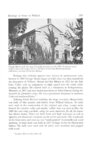
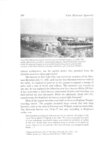
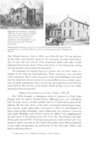
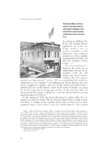
Show UTAH HISTORICAL QUARTERLY indispensible for the many poor children getting a street education in vice and crime before reaching the school age of six years.”19 With the growth in the awareness of the benefits of the kindergarten movement, charitable attention began to focus on kindergartens. Augusta W. Grant wrote about kindergarten work in her journal: “Attended meeting of the board of the kindergarten association of which I am secretary. The kindergarten has been opened for about a month ago. It is a school for little waifs, and I think it is a very sweet charity.”20 The Salt Lake Kindergarten Association also advocated the education of mothers and kindergarten teachers. The Association did not only organize kindergartens but also arranged for a kindergarten teacher training course taught by Bessie Goodrich.21 The organization strived to support the cause among community members with the hope that kindergartens would become part of the public school system. The Association secured passage of territorial legislation in 1894 that allowed Utah school boards to make kindergartens part of their public schooling.22 As momentum accelerated, a new organization, the Free Kindergarten Association, held its first meeting in the Salt Lake City Ladies’ Literary Club on June 18, 1894.23 Under the leadership of Emma J. McVicker, the Free Kindergarten Association replaced the Salt Lake Kindergarten Association. 24 With the Utah Federation of Women’s Club providing accommodations, the Free Kindergarten Association arranged for “Froebel classes” to educate mothers.25 Alice Chapin began to teach and conduct the kindergarten teacher training. As a result of the Association’s ongoing fund raising activities, the first free kindergarten commenced in Januar y 1895 under the name of Neighborhood House.26 Blanche Brown, a teacher from Chicago, was first assigned to teach the children. However, because of illness, Brown returned to the East Coast, and Alice Chapin took over the leadership of the 19 “First Kindergarten in Salt Lake City,” Anne Marie Fox Felt papers, box 1, fd. 4, p.1. This approach led to opening several orphanages in Utah. Floralie Millsaps, “Caring for Children: The Orphan's Home and Day Nursery Association,” Beehive History 27 (2001): 26-28; Kathryn Callahan, “Sisters of the Holy Cross and Kearns-St. Ann’s Orphanage,” Utah Historical Quarterly 78 (Summer 2010): 254-74; and Anne Marie Fox Felt papers, box 1, fd. 10. 21 “First Kindergarten in Salt Lake City,” 1 . 22 “Reminiscences of the Beginning of Kindergartens in Salt Lake City,” 6. 23 The Ladies’ Literary Club was organized by non-Mormon women in Salt Lake City for the purpose of “literary pursuits and mental culture.” Patricia Lyn Scott, “Eliza Kirtley Royle: Beloved Club Mother,” in Colleen Whitley, ed., Worth Their Salt (Logan: Utah State University Press, 1996), 44-59. 24 Emma J. McVicker was an enthusiastic educator in Utah. She began her career in the Collegiate Institute and later became the first woman superintendent in Utah. Regarding her life, see: Carol Ann Lubomudrov, “A Woman State School Superintendent: Whatever Happened to Mrs. McVicker?” Utah Historical Quarterly 49 (Summer 1981): 254-61. 25 “Mother’s classes” or “Froebel classes” referred to the same training session which focused on Froebel’s method. The curriculum of the classes included Froebel’s works, Peabody’s letters, and Pestalozzi’s works as well. This training also aimed to teach appropriate children songs and games. “Reminiscences of the Beginning of Kindergartens in Salt Lake City,” 11. Emma J. McVicker was also the president of the Utah Federation of Women’s Club. See: Jill Mulvay Derr, “Scholarship, Service, and Sisterhood: Women’s Clubs and Associations, 1877-1977” in Scott and Thatcher, eds., Women in Utah History, 249-94. 26 The Salt Lake Herald, January 13, 1895. 20 138 |