| OCR Text |
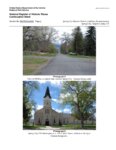
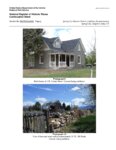
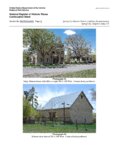
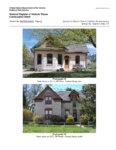
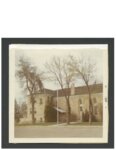
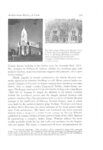
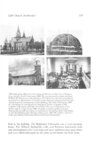
Show United States Department of the Interior National Park Service OMB No. 1024-0018, NPS Form National Register of Historic Places Continuation Sheet Section No. 8 Page 8 Spring City Historic District (Addition Documentation), Spring City, Sanpete County, UT district as a whole. Along with the rare extant resources that are significant in the area of Exploration/Settlement, there are hundreds of mostly modest residences with historic outbuildings that physically reinforce the significance of the historic district in the areas of Community Planning & Development and Agriculture. Settlement Period (1859-1869) and the Incorporation and Growth Period (1870-1911) The architectural significance of the Spring City Historic District as described in the original nomination was based on four distinct factors: 1) the abundance of well-preserved buildings and outbuildings constructed from Sanpete County’s oolite limestone; 2) a number of exemplary examples of vernacular and folk design, including rare examples of the Scandinavian influence of early immigrants; 3) an unusually high number of extant buildings with strong links to the predominant religion of the early settlement; and 4) excellent examples of the transition from the vernacular to pattern book designs that reflect the community’s prosperity. As far as overall historic integrity is concerned, the original nomination noted the “quality which serves to distinguish Spring City from other towns in the valley is the large number of buildings which appear much as they did in the years before the First World War.” 58 There are a high number of extant log and adobe buildings contribute the historic character of the district; including many that are not easy to distinguish in the landscape because they have been covered with later veneers or repurposed for outbuildings. The adobe yard in the southwest corner of the city has been evaluated as a contributing site. Buildings constructed with oolite limestone are ubiquitous throughout Sanpete County, Spring City’s collection of limestone resources stand out compared to settlement-era towns with similar histories. William Parry, who conducted the first study of the oolite limestone in Sanpete County noted that the widespread use of the material was “due to its cream color, ease of quarrying and carving, durability, and its exposure in easily accessible sites near the valley floor.” 59 Manti, the county seat and location of the cream-colored limestone Manti LDS Temple, has a slightly higher number of extant stone buildings than Spring City, but other Sanpete Valley towns have far fewer. Because of population decline and ongoing preservation efforts, Spring City’s stone building are particularly well-preserved and prominent within the setting. In addition, the historic district includes numerous examples of limestone outbuildings, including barns, granaries, root cellars, well houses, etc. The first stone mason recorded on a Spring City census record was Thomas Bywatter, a Welsh mason in 1870. Between 1880 and 1900, the census recorded a dozen men working as stone masons. Cindy Rice, who published the first definitive study of Spring City architecture, noted three in particular: “Jens J. Sorensen, John [Jens] Peter Carlson, and John Bohlin, were the principal craftsmen. All three helped with the construction of the ward chapel as well as the Manti Temple. Many of the stone homes in Spring City can also be attributed to their efforts.” 60 John Bohlin was the only man listed as a stone mason on the 1910 census of Spring City. The Spring City LDS Meetinghouse, completed in 1911, is a magnificent example of a Victorian Gothic chapel executed in limestone. The design of the meetinghouse is attributed to Richard C. Watkins, a master architect who was based in Provo, Utah. 61 The extant oolite limestone masonry spans the Settlement Period (1859-1869) and the Incorporation and Growth Period (1870-1911). From the oldest surviving stone house (1860) to the last stone building, the meetinghouse (1911), the oolite limestone resources of the historic district are significant as representatives of the vernacular to high-end architecture, and everything in between. There are classical examples of the Greek Revival and Gothic Revival in stone, Spring City Historic District (1980), sec. 7, p. 3. William L. Parry, “A Majestic Building Stone: Sanpete Oolite Limestone,” in Utah Historic Quarterly, vol. 81, no. 1 (Winter 2013), p. 46. 60 Cindy Rice, p. 263. The other masons are Christian Nielsen, Wyllie Allred, Abednego Olsen, Nils Larsen, Bertle Christiansen, Mahonri Christensen, and Nils Omareen and sons. 61 The date 1914 on the building is a reference to the dedication date. Traditionally, LDS meetinghouses were not dedicated until all construction debt had been paid off by the local congregation. 58 59 |