| OCR Text |
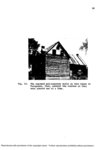
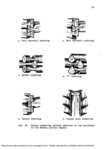
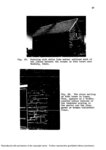
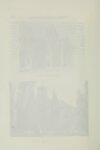
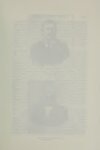
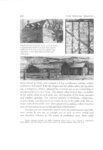
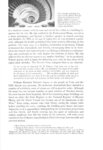
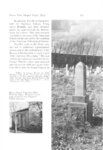
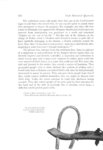
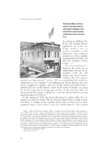
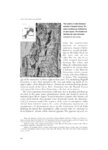
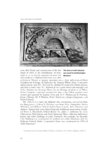
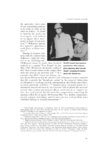
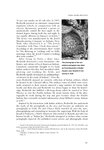
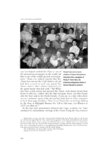
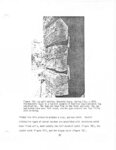
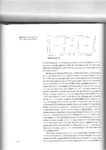
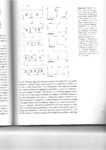
Show Folk Material Culture 135 Christian burial: face to the cast to greet the morning of the resurrection. The traditional shapes of grave markers, which have come to us from antiquity, are virtually unstudied. But the significance of the grave markers is largely if not exclusively symbolic, since they are monuments to those who have ceased to be, who have gone back to the earth. To my knowledge, there is no widely used set of symbols that represents living, or birth, or the notion of a prelife, like the gravestone represents death. Interestingly, our most abstract and symbolic use of language—poetry— is concerned largely with death. It is no surprise then that folk material culture in Utah and elsewhere reaches its most abstract and profound statements when connected with the dead; and in the cemeteries, cut in stone, etched in cement, and carved in wood, one sees depicted man's concern with what he feels is most important, most mysterious, and most terrifying. As mentioned, a prevalent burial symbol in the Fairview cemetery is the lamb. Pictured here (fig. 4) is a set of lamb stones. Lambs and doves are prevalent burial motifs throughout Denmark, Norway, and Sweden; but to say that the lamb reliefs in Fairview have definite Scandinavian antecedents would be conjectural. It is true, however, that as one proceeds from north to south into Sevier County the lamb as burial symbol becomes less and less frequent. The most ubiquitous burial symbol in Mormon cemeteries of the West is the handclasp motif. However, the handclasp motif does not predominate in the Fairview cemetery. But as one moves to the south the handclasp becomes the dominant symbol, as it is in most Utah-Mormon cemeteries. This provides a graphic representation of the loss of native burial symbols, accompanied by a subsequent adoption of the symbols of the dominant culture: one manifestation of the vernacular regression. This highly metaphoric symbol, the handclasp, represents the Mormon burial in much the same way the winged death's-head connotes Puritan burial. About Puritan burial symbols Alan I. Ludwig has noted: By creating symbolic gravestones and the rituals surrounding them, the Puritans wanted to take a more d r a m a t i c role in bringing the eternal closer to a realization in form and thereby infusing the symbol with some of its power. T h e y did so in an act of piety which significantly took place outside the a p p a r a t u s of the institutionalized church. 1 "' Unlike the Puritans, Mormons have retained the act of piety (evident in the handclasp symbol) within the institutional church. I recently heard '"Alan I. Ludwig, Graven Images: New England Stonecarving 1815 (Middletown, Conn.: Wesleyan University Press, 1966), p. 52. and its Symbols 1650- |