| OCR Text |
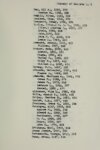
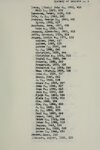
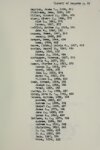
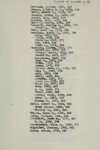
Show WINTER 2013 UHQ pp 4-90_UHQ Stories/pp.4-68 12/5/12 9:38 AM Page 41 LABOR SPIES the Miner’s Union Hall and counted between 255 to 260 men who were loyal to the strike committee and were not going to attend the meeting . . . .[During the meeting] there were 106 votes cast and every one of those votes were to call the strike off and go back to work.59 On June 20, 1919, after talking with a man named Dave Gwilliams, who was the chairman of the strike committee, the operative reported that Gwilliams “seems very down-hearted and said that he was sure now that the strike was broken, because so many of the men he thought were loyal to the committee were going over to the new faction.” He also noted that he had overheard other men in the miner’s hall express their concern that the miners who had returned to the mines seeking work “were apt to get all of the preferred jobs.” The operative also did his part to further discourage the miners from continuing the strike by telling them “it was useless to try and continue with the men split up in two factions as they are now, and with more of them going back up the hill each day rustling for work.”60 Despite the strike committee’s discouragement about continuing the strike, union leaders confided to the operative that they “were going to get busy and keep up the agitation and hard feelings as much as possible.” Bert Young, an IWW delegate, even said he hoped that the mine owners in Park City did not raise the wages because it would hurt their plans of trying to get the boys into “one big union.”Young also revealed his plans to go “over to Eureka and also around the Tintic Standard Mine” for a few days to “try and write up as many new members as possible,” noting that “he would have to be very careful so that the ‘home guards’ as he called them, would not know that he was in the city.”61 In addition to his regular reports, the operative prepared a list of approximately two hundred men who were IWW members or union sympathizers and he also kept a tally of the miners, radicals and foreigners he observed leaving town with their baggage. Some of the intelligence the operative passed on to the mine owners may have actually benefited the miners in the long run, such as the conversation he overheard between union leaders Dave Gwilliams and G. Adamson that the miner’s hospital was in “deplorable condition.” The operative also relayed the opinion of a miner named Willard McKenzie, a “radical” who did not belong to the IWW, that one foreman was “trying to get the tunnel through too cheap and that was why he was passing some timber work that should be done at once.” Other dangerous conditions in the mine, such as “broken caps that needed to be changed at once,” were also brought to the mine owners’ attention.62 By the end of the summer of 1919, the strike had completely collapsed and from 1921 to 1922, production in the mining district doubled.63 59 Ibid, June, 13, 14, and 17, 1919. Ibid, June 20 and 22, 1919. 61 Ibid, July 4, 1919. 62 Ibid, August 7, 1919. 63 Compton and Hampshire, “Park City,” 332. 60 41 |