| OCR Text |
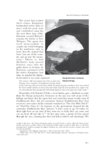
Show FALL 2013 pp 386-404_UHQ BReviews/pp.271-296 9/16/13 1:22 PM Page 387 BOOK REVIEWS painstaking care”; to Brodie, Morgan was an “exacting historian and a penetrating critic” (Brodie, xiii). Many chapters both have historical value and demonstrate Morgan’s perspective and careful scholarship: “Mormon Story Tellers,” “The Deseret Alphabet,” the editor’s introduction to The State of Deseret, the Danites in Mormon History in Missouri, and The Mormon Ferry on the North Platte: The Journal of William A. Empey (May 7–August 4, 1847). The longest chapter, at about 150 pages, deals with Mormon bibliographies and shows Morgan’s groundbreaking efforts to begin to gather all of the works dealing with early Mormonism in one bibliography. Morgan was an ambitious and prodigious pioneer in this effort, and Saunders’s volume detailing Morgan’s historical writings identifies Morgan and his work as foundational for all later Utah, western, and Mormon historians. RICHARD W. SADLER Weber State University LeConte Stewart Masterworks. By Mary Muir, Donna Poulton, Robert Davis, James Poulton, and Vern Swanson. (Layton, UT: Gibbs Smith, 2012. 304 pp. Cloth, $75.00.) IN THE 1920s AND 1930s, many American artists looked to the “American Scene” for inspiration. Their subject matter was the people and places of the United States beyond cultural hothouses like New York City. Grant Wood, for example, famously painted Iowa. John Steuart Curry looked to Kansas while Thomas Hart Benton turned his attention to Missouri. Today we refer to their work and this inward impulse as “Regionalism”—a blanket term that requires as many variations as America has places. Arguably the artist who best defined this style in Utah was the painter LeConte Stewart (1891–1990). In his foreword to LeConte Stewart Masterworks, publisher Gibbs Smith states that this text will “help further assert LeConte Stewart’s importance in the history of Amer ican Regionalist painting” (8). In many ways this book makes a strong argument for an increased visibility for Stewart and an elevated place for him within a broader and ever-expanding canon of American art. No other artist was as invested personally, financially, or spiritually in the Utah landscape as Stewart. From his home in Layton, he roamed the countryside of Davis, Weber, and Morgan counties for eight decades painting scenes that captured his eye. Employing an Impressionistic and tonalist style, Stewart emphasized the everyday over the iconic. According to Wallace Stegner, “the last thing Stewart can be accused of is prettification. The marks of human effort, ugly or otherwise, interest him.”1 Masterworks primarily 387 |