| OCR Text |
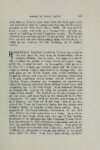
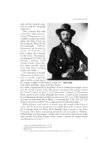
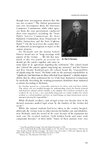
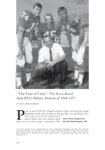
Show ATHLETIC PROTESTS a “serious mistake of judgment.” Minor’s name had been submitted for clearance without, according to Wilkinson, mention of his race. When religion professor Daniel H. Ludlow informed an administrator that Minor was “colored,” the administrator reported the news to the academic vice president, Earl C. Crockett. “Crockett never even informed me,” Wilkinson wrote, “thinking apparently on the representation that he was light in color that others would not know it. The man’s photograph appeared in the paper the first of this week, from which it was apparent that he was colored. . . . I wish we could take him on our faculty,” Wilkinson continued, “but the danger in doing so is that students and others take license from this and assume that there is nothing improper about mingling with the other races.”13 By the next day, administrators had changed Minor’s duties from teaching students to advising departmental administrators, thus minimizing any risk of “mingling.”14 Some six months later, Wilkinson informed a few trustees that “a colored boy on the campus [had] been a candidate for the vice presidency of a class and receiv[ed] a very large vote.” The trustees “were very much concerned.” In fact, Wilkinson recorded in his diary that Harold B. Lee, an influential LDS apostle, had told him that “if a granddaughter of mine should ever go to the BYU and become engaged to a colored boy there I would hold you responsible.” Wilkinson retorted that Lee should “hold himself responsible because he was one of the members of the Board of Trustees that permitted the present policy [regarding the admission of blacks]; that if it was not right he ought to change it.” All three trustees present for the exchange favored “barring colored students from the BYU.” “This is a very serious problem,” Wilkinson recorded, “on which, of course, there are obviously arguments on both sides but surely we will have to face it squarely and resolve it.”15 Early the next year, and evidently for the first time ever, trustees went on record as officially “encourag[ing] Negro students to attend other universities.”16 In February 1961, dur ing a basketball game against Utah State University in Logan, BYU became the target of the first race-related incident involving intercollegiate athletics. During the game, BYU’s Bob Wilson fouled out, at which point he and USU’s Max Perry “traded a few punches under the basket.” Soon other players joined in, including BYU center Dave Eastis and USU’s Darnel Haney.17 New violence broke out at the end of the game. Wilkinson recorded: “This colored player by the name of Haney came up and when one of our players [Eastis] was standing talking to others completely unguarded, swung at him and hit him square 13 Wilkinson, Diary, May 5, 1960. Ibid., May 6, 1960. 15 Ibid., November 10, 1960. 16 Board of Trustees, Minutes, February 1, 1961. 17 “Aggies ‘KO’ Cats 94–73,” Daily Universe, February 13, 1961. 14 207 |