| OCR Text |
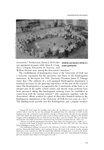
Show UTAH HISTORICAL QUARTERLY pieces of flesh, bowel, clothing, hair, skin and the like.” Richards was also concerned about the psychological fallout from the accident and took particular care to ensure that all traces of the victims were collected or removed. He intuitively understood that people would visit this site, perhaps as part of the grieving process, and finding blood or flesh would simply be horrifying. After the train had been moved away, the rescue workers “took flaming torches and seared the ties and rails and removed all blood spots until there was no remaining evidence of the accident.”16 Dr. Richards recalled later that the dead bodies “were put together in [similar] caskets as carefully as could be and inasmuch as many were fragmented, experts were called in.” One expert, “who had the ability of matching like tissues,” came from Denver. Some “bodies were torn to the point where no identity could be established,” except through dental records.17 A special local Red Cross relief committee was immediately formed to direct aid to the accident victims and their families. The committee planned to raise funds to pay for medical bills and other immediate needs, as well as to pay for long term care for those crippled in the accident. Richards served as the chairman.18 Six mass funerals were planned for Sunday and Monday. Two of the funerals, morning and afternoon, were held in the school auditorium of Riverton Junior High to make room for the numerous mourners.19 Ten seconds of silence were observed in church services throughout the state on Sunday. Jordan High School suspended classes after the accident and did not reopen until Tuesday, while Riverton Junior High School was closed on Monday. Other school children in the Jordan school district were asked to go to the nearest schools to their homes on Monday, regardless of whether they attended that school normally, where they assembled at 10:00 a.m., to stand at attention and “pay silent tribute to the memory of their deceased schoolmates.”20 The students were then dismissed for the rest of the day. The nation’s newspapers ran the accident as front page news. The newspaper coverage asked the obvious questions: what had happened, why had it happened, and how could it be prevented in the future? The Salt Lake Tribune reported that local fog had been heavy, making visibility a problem, 16 Ann R. Barton, ed., Paul S. Richards, “The Memoirs of Dr. Paul” (1965), 73-74. This typescript document is available at the Spencer S. Eccles Health Sciences Library at the University of Utah. Copies are also available at the Special Collections at the J. Willard Marriot Library at the same university and the Historical Department Library, The Church of Jesus Christ of Latter-day Saints, Salt Lake City. 17 Ibid. 18 “Relief Committee Acts to Aid Bereft Families,” The Salt Lake Tribune, December 3, 1938. 19 See “Wards Plan Mass Funeral Rites for Bus Disaster Victims,” The Salt Lake Tribune, December 3, 1938; “Rail Crossing Crash Victims’ Rites Set Sunday, Monday,” The Salt Lake Tribune, December 3, 1938; “Mass Funerals Will Honor Crash Victims,” The Salt Lake Tribune, December 4, 1938; and “Crash Victims Buried as Another Dies,” Salt Lake Tribune, December 5, 1938. 20 “ICC Starts Fatal Crash Investigation,” The Deseret News, December 3, 1938. 164 |