| OCR Text |
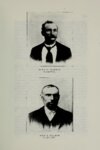
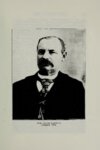
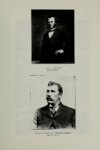
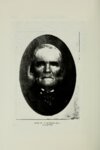
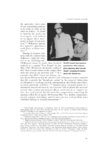
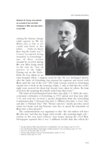
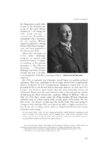
Show UTAH HISTORICAL QUARTERLY Another Utah veteran who fought at Gettysburg was Confederate Charles Warren—“Old Charlie.” During the trip, he was nicknamed “Pickett” by the other Utah veterans because he was a veteran of Pickett’s Charge. Warren enlisted in the Confederate Army and served as a fourteenyear-old orderly in the 28th Virginia Infantry Regiment, the regiment of his uncle Colonel John Allen. Disobeying the orders of his uncle, he was in the first rank to reach Cemetery Ridge during Pickett’s Charge.80 While at the reunion, Warren met and shook hands over a cannon at the “Bloody Angle” with a Union veteran, Daniel O. Ball, one of Lieutenant Alonzo H. Cushing’s gunners from Company A, Fourth U.S. Artillery Battery.81 Little did Warren know that he and Ball had actually met once before—during July 1863 on Cemetery Ridge. 82 Of the experience, Warren said, “You see, I had no thought of meeting any of the boys on the other side so I could recognize them at Gettysburg, but I wanted to see the old Bloody Angle and that was one of the first places I made for when we reached Gettysburg. I had little trouble,” he said, “in finding the place for it was well marked with a monument and two cannon. As I was looking over the old gun I heard a man say he manned the same gun on that day just fifty years before.” After comparing battle memories, Warren and Ball figured out that they “had matched weapons during the thickest of the fight. I was a lad of fourteen years old and six months at the time and of course I was smaller and lighter than the gunner who proved afterwards to have been my new friend Ball. He bowled me over with the swab stick he had been using on the gun and I attacked him with one old sword bayonet, the only weapon I had. After the melee I came out with a bayonet wound in my forehead and Ball was shot through the arm.”83 (Warren left the South after the war and headed west, ending up in Utah, because he “couldn’t stand Carpet-bagger rule.”)84 As the New York Times noted, the reunion had a great leveling effect on 80 “Shakes Hands Over Cannon with Foe of 50 Years Ago,” Salt Lake Herald-Republican, August 31, 1913; “Confederate Veteran Going Home,” Salt Lake Telegram, February 28, 1928; “Hero of South Is Honored With Cross on Memorial Day,” Salt Lake Herald-Republican, June 1, 1915. 81 At the outbreak of the Civil War, Battery A, Fourth U.S. Artillery—the unit Cushing would soon command—was “stationed at Fort Crittenden, in Utah Territory, protecting settlers from Indian attacks.” Quoting an 1863 press release, the New York Times reported that Cushing’s “gallantry was beyond praise.” “What the Times Reporters Saw of Pickett’s Charge,” New York Times, June 29, 1913. 82 Daniel O. Ball might have served in Utah Territory with Battery A, Fourth U.S. Artillery, at the beginning of the Civil War. An August 1861 enlistment record from “Echo Canon,” Utah Territory, exists for a soldier named Daniel Ball, aged twenty-six. Registers of Enlistments in the United States Army, 1798–1914, National Archives Microfilm Publication M233, roll 27. 83 “Shakes Hands,” August 31, 1913. See also “Defy Gettysburg Heat,” July 2, 1913; “Stories of Reunion,” Ogden Standard, July 2, 1913. 84 Upon the death of his wife in 1928 and with assistance from the Salt Lake Chapter of the United Daughters of the Confederacy, Warren decided to return to the South after a fifty-six year absence, twenty years of which he spent in Salt Lake City, to spend his last years with his comrades at the Lee Soldiers’ Home in Richmond, Virginia. Warren passed away at the Soldiers’ Home in 1929. “Exiled Veteran to Return to South Glad to Go Home—Maybe, He Says,” Salt Lake Telegram, June 1, 1928; “Confederate Veteran Dies; Charlie Warren, Who Served ‘Lost Cause’ Dies in Virginny,” Salt Lake Telegram, October 28, 1929. 284 |