| OCR Text |
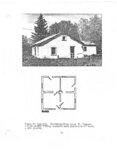
Show FALL 2013 UHQ pp 304-385_UHQ Stories/pp.4-68 9/16/13 1:25 PM Page 375 MUrDEr AND MAPPING round allocation of ammunition and a broken wagon in Moab before continuing south on the first ten miles of good road. Eventually, however, the “thoroughfare” changed to loose sand, rocks, and sharp sliding curves, which necessitated making another cache of 250 pounds of grain. In flat, open terrain the oversized army wagons with their long wheelbase and sixmule teams worked well, but once steep hills and narrow canyons had to be traversed, manhandling and roping the wagons reduced the rate of travel to a crawl.13 On June 11 the party reached Hatch’s Cabin on the floor of Dry Valley. There they encountered a cowboy, in the employ of the Carlisle Cattle Company, who feared that Mancos Jim and his men were in the vicinity. There had been no killing or stealing, but these Indians were “armed to the teeth and very impudent when spoken to.”14 Signal fires between the La Sal and Blue Mountains provided another indicator of Indian presence, but not until sixteen Southern Utes under their leader “Erny” or “George” visited the encampment did the soldiers see their adversary in the flesh. This band was en route to Blue Mountain on a hunting expedition. The leader, George, “has a good command of the English language; he is friendly, tall and wears a wreath of leaves upon his head,” but he worried what the soldiers’ intent toward his people might be. Morton explained his reason for being there, saying that he did not view the Utes as hostile; the two groups peacefully went their different ways.15 Not as much could be said for a gang of six to twelve whites who had been on a horse-stealing spree that ranged from Dove Creek, Colorado, to Bluff, Utah. Morton learned that a posse of cowboys and Mormons led by the San Juan County sheriff was pursuing the horse thieves. Earlier, the gang had taken refuge in an Anasazi ruin forty miles northwest of Bluff, fired upon their pursuers, killed one man, and dispersed the rest. The sheriff was now continuing the chase, supplemented by a fresh posse of Carlisle’s cowboys.16 Meanwhile, for Morton’s soldiers, the next day started with the caching of another 250 pounds of supplies and the shearing off of another wagon wheel a few yards out of camp. Although this expedition was supposed to 13 Ibid. Ibid. 15 Ibid. 16 Ibid. Albert R. Lyman, a local San Juan historian, has twice discussed the murder of Bill Ball, the foreman of the L. C. Cattle Company. Lyman provides some clarification, although he also has some variance. In his Indians and Outlaws: Settling of the San Juan Frontier (Salt Lake City: Publishers Press, 1980), 75–78, he tells of three thieves who killed Ball near what is today’s Dead Bull Flat, fifteen miles northwest of Bluff, while in his unpublished manuscript, “The History of San Juan County, 1879–1917” (Special Collections, Harold B. Lee Library, Brigham Young University, Provo, Utah), 46–49, he gives more detail and claims there were four desperados. The report by Lieutenant Morton was the prevailing wisdom of the time, based on the current, but perhaps not as accurate, information of what he had been told. Regardless of the number of miscreants or the exact location of where Ball died, the issue of lawlessness was a concern that most people shared at that time. 14 375 |