| OCR Text |
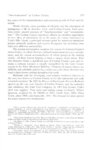
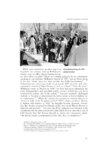
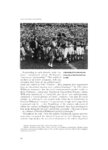
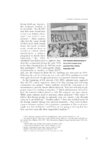
Show WINTER 2013 UHQ pp 4-90_UHQ Stories/pp.4-68 12/5/12 9:38 AM Page 79 STudENT POLITICAL ACTIVISM it.”87 Utah’s Democratic Senator Frank Moss echoed Hinckley’s sentiment six days later.88 But at a special Veteran’s Day devotional service the next week, Hartman J. Rector Jr., a Navy veteran and member of the Church’s First Council of the Seventy, appeared in military uniform to highlight his support of U.S. policy. “This nation represents the last great bastion of freedom and liberty,” he asserted.89 The next year, again only a few days apart, Hinckley reaffirmed his hatred “of war with all its mocking panoply,” while Rector speculated that war “was an instrument in the hands of the Lord” to further missionary work in Vietnam.90 Meanwhile, that spring, LDS Church member Frank C. Child, a professor of economics at the University of California–Davis, told BYU students, “In the name of freedom we stamp out freedom,” and former U.S. Presidential candidate George W. Romney said that the war “was the most tragic foreign policy mistake in our nation’s history.”91 Debate over the war soon shifted to more tangible activism. Although BYU students of the late 1960s and early 1970s were influenced by their peers on other American campuses, a tradition of sometimes large-scale demonstrations was not unknown to BYU alumni. In 1910, students paraded through Provo in support of prohibition.92 The next year, almost the entire student body gathered to oppose the dismissal of three faculty members for teaching organic evolution and biblical criticism.93 In 1919, students demonstrated for the League of Nations and later boycotted devotional services because of a policy of forced attendance.94 In the early 1960s, a protracted struggle to extend BYU’s Christmas break divided the school. At the height of the controversy, more than two thousand students burned the Dean of Student Life in effigy.95 The mid-1960s also saw the emergence of BYU panty raids and hardening of the school’s policy on “demonstrations.” Following one particularly animated siege in 1965, 87 Combined from “The Loneliness of Leadership,” November 4, 1969, in Speeches of the Year, 1969-70 (Provo: Brigham Young University Press, 1970), 3, and “Elder Hinckley Speaks of Leaders’ Loneliness,” Daily Universe, November 5, 1969. The second half of Hinckley’s comment appears only in the Daily Universe. 88 “Senator Moss Says Leave Vietnam,” Daily Universe, November 11, 1969. 89 Rector, “Let Us Stand Up For Freedom,” November 11, 1969, in Speeches of the Year, 1969-70 (Provo: Brigham Young University Press, 1970), 8. 90 Hinckley, “Lest We Forget,” November 10, 1970, in Speeches of the Year, 1970-71 (Provo: Brigham Young University Press, 1971), 3; “Missionaries to Nam,” Daily Universe, November 16, 1970. 91 “War Topic of Viet Advisor,” Daily Universe, April 22, 1970; Romney, “A New Age for America,” April 27, 1970, in Speeches of the Year, 1969-70 (Provo: Brigham Young University Press, 1970), 5. 92 “Greatest Parade in the History of the World,” White and Blue, November 8, 1910. 93 John T. Wahlquist, “B.Y.U. Reminiscences,” 1-2, in N. L. Nelson Biographical File, Perry Special Collections. 94 Ibid.; “Dean’s Council Vetoes Student Body Petition for Registration Delay,” Daily Universe, December 12, 1950. 95 See “Senate Vote Falls Short, IOC Subjection Remains,” Daily Universe, May 10, 1960; “Grumble, Grumble,” Daily Universe, May 20, 1960; “Students Question Dean on Vacation, Rent, Jobs,” Daily Universe, October 26, 1960; “Short Holiday Ahead,” Daily Universe, October 27, 1960; “Vacation Mad Students Rally at Cannon Center,” Daily Universe, December 9, 1960; “It’s Official! Leave Friday,” Daily Universe, December 12, 1960; “Angry Students Erupt in Protest Rally,” Daily Universe, December 3, 1962; “Five Days Added for Travel,” Daily Universe, October 11, 1967. 79 |