| OCR Text |
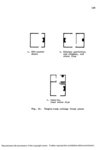
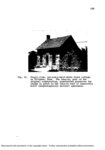
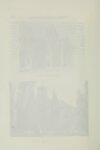
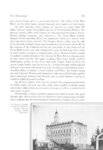
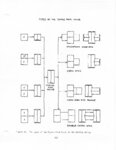
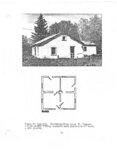
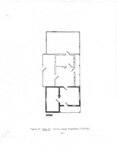
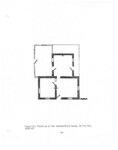
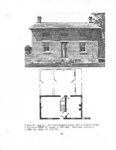
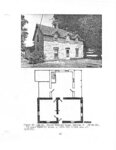
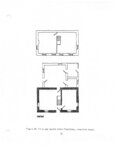
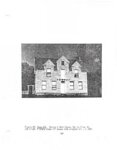
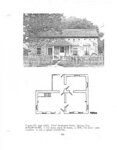
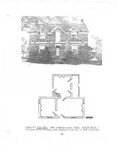
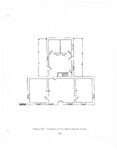
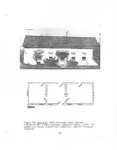
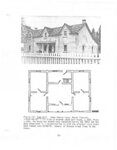
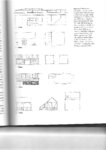
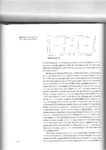
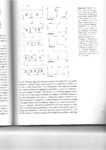
Show single room wide, two rooms deep, with only one side wing; the cross wing with passageway, a single room wide, two rooms deep, with a single side wing which contains a passageway; and the double cross wing, two ~ ~ one room wide, two rooms deep sections separted by a connecting wing. After the orientation of the base concept was decided, next came the rules for massing and piercing. In the valley, the building rules provide for symmetrical houses that may be tripartite or bipartite. Tripartite houses have a door in the middle of the principal facade that is flanked by one or two bays. The completed house must always have an odd number of openings (the door plus an equal number of windows each side) and there may be two gable-end chimneys, two centrally placed chimneys, or one chimney located asymmetrically on the ridge. The massing rules for bipartite houses require that the central position on the principal facade be an open space. Doors and windows are found in even numbers to each side of this open area and there will always be an even number of bays in patterns of two, four, or six. There may be two chimneys at the ends of the ridge or one centrally placed chimney. The house is now almost complete; only its exact size remains to be determined. In the valley there are rules for expanding the base , concept both upward and to the rear. The house may be one story, one-and-a-half story, or two storys high and it may either be single pile (one room deep) or double pile (two rooms deep). By applying these basic rules to the twelve available base concepts, it is possible to generate the actual houses found in the valley. In the accompanying diagrams (figures 23, 24, 25, 26, 27, and 28), I have provided a step-by-step outline of the structuring capacity of the design system. In the diagrams, I have included the names for the 107 |