| OCR Text |
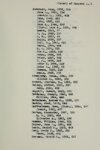
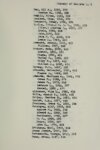
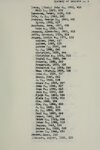
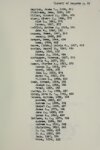
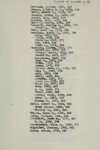
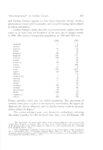
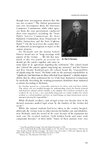
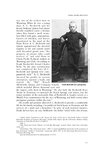
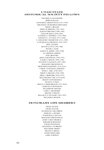
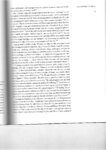
Show UTAH HISTORICAL QUARTERLY criteria to determine who would travel at the state’s expense. The first priority went to veterans of the battle of Gettysburg. The second priority went to Confederate veterans “out of courtesy to the southerners.” The third, and final, priority was Union veterans who were physically fit enough to make the trip. Several veterans who wanted to attend were “barred for this reason.” Prioritization was required because Utah did not authorize enough funds to send all of the state’s Civil War veterans who wanted to attend the reunion, and only sixty-six men could be accommodated in the tents reserved for the Utah delegation of veterans.23 In developing these criteria, GAR leaders did not provide any special advantage for members of the Lot Smith Utah Cavalry Company—the only active duty Civil War military unit from Utah Territory.24 (See pages 288-89 for a list of Civil War veterans who attended from Utah.) Lucian H. Smyth, who chaired several Utah GAR commemoration committees, traveled to Gettysburg in May 1913 to attend a Pennsylvania commission meeting and tour the battlefield. He gave an enthusiastic report of the preparations and said, “I wouldn’t have missed seeing that battle field for $1000.”25 Travel arrangements for the Utah veterans were discussed during the thirty-first annual GAR Department of Utah encampment, held in Salt Lake City on May 17, 1913.26 Resolutions passed during the encampment expressed “grateful appreciation” to Utah’s governor and legislature for appropriating $7,500 to meet the veterans’ expenses but regretted that, “owing to the congestion of business in the closing hours of the session,” the state government did not actually make the funds available. The Utah Civil War veterans were clearly disappointed that the state government had failed to deliver promised financial support. A separate, but related, GAR resolution urged “all our comrades and our friends the confederate soldiers residing in Utah to attend this great anniversary” in order to “help bury the last lingering remnant of sectional bitterness in the great ocean of patriotism that covers our beloved country.”27 It is a telling commentary on those times that even though half a century had passed since the war’s end, the GAR still felt the need to reach out—specifically addressing Confederate soldiers and appealing for unity and patriotism. 23 “Day’s Anxious Vigil Rewarded; Veterans Leave for Gettysburg Today,” Salt Lake Tribune, June 27, 1913; “Only 66 Veterans Go to Gettysburg at State’s Expense,” Salt Lake Herald-Republican, June 26, 1913. 24 Four Union veterans from the Lot Smith Utah Cavalry Company attended the 1913 Gettysburg reunion: James Isaac Atkinson (Woods Cross) and Joseph A. Fisher, John H. Walker, and Seymour B. Young (Salt Lake City). For additional details, see Joseph R. Stuart and Kenneth L. Alford, “The Lot Smith Cavalry Company: Utah Goes to War,” in Civil War Saints, Kenneth L. Alford, ed. (Provo, UT: Brigham Young University Religious Studies Center, 2012). 25 “Gettysburg Field Awaits Veterans,” Salt Lake Herald-Republican, May 24, 1913. 26 “G.A.R. Encampment to [B]e Held Here Today,” Salt Lake Herald-Republican, May 17, 1913. 27 “Utah Department, G.A.R., Holds Meeting; Veterans to Go East,” Salt Lake Herald-Republican, May 18, 1913. 272 |