| OCR Text |
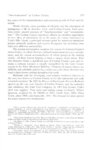
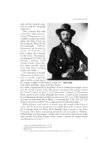
Show FALL 2013 UHQ pp 304-385_UHQ Stories/pp.4-68 9/16/13 1:25 PM Page 327 hArOLD BrIDE INTErVIEW newspapers, ending up at the Deseret News. Russell did not get along with either the business manager or the editor of that paper and believed (no doubt correctly) that he was overworked, underpaid, and underappreciated.6 Eventually, Russell began submitting short articles to Collier’s Weekly, which had perhaps the highest circulation of any weekly magazine in the country, and Collier’s published some of his submissions. With the encouragement and letters of recommendation from Jordan and others, “Ike” moved to New York City to seek fame and glory as a writer. Immediately after landing in the city, he began placing freelance articles with the New York World. Within thirty days after Russell’s arrival, the New York Evening Sun hired him full-time, and he felt secure enough to have his wife, Allie Farr Russell, and their infant daughter join him in New York. His work on labor and aviation issues soon attracted the attention of the Times, and in early 1910 he was lured away to write for the more prominent newspaper.7 Russell rose quickly through the ranks of reporters at the Times, and the paper gave him many important assignments, allowing him to cover major political stories, labor strikes, the fledgling aviation industry, and a variety of other subjects.8 Ike also began publishing longer articles on a freelance basis for many progressive magazines, including Collier’s Weekly, Harper’s Weekly, and Pearson’s Magazine, and developed professional relationships and friendships with influential editors such as Norman Hapgood, Mark Sullivan (Collier’s), and John Thompson (Pearson’s).9 As a result, he was one of the few, if not the only, nationally recognized muckrakers who hailed from Utah. At the time of the Titanic disaster, however, the somewhat mercurial Russell had annoyed his superiors. Carr V.Van Anda, the legendary managing editor of the New York Times, handled coverage of the Titanic’s sinking in a 6 Kenneth L. Cannon II, “Isaac Russell, Mormon Muckraker and Secret Defender of the Church,” Journal of Mormon History 39 (Fall 2013) (forthcoming); Janet, “Salt Lakers in Gotham,” Deseret News, March 27, 1909; [Ben L.] Rich to Ben E. Rich, December 2, 1908, copy, box 2, fd. 22, Isaac Russell Papers, 1898–1927, M0444, Department of Special Collections, Stanford University Libraries (hereafter cited as Russell Papers); “Isaac Russell,” Progressive, November 1, 1913, 1; “Guide to the Isaac Russell Papers, 1898–1927,” Online Archive of Califor nia, accessed December 2011, http://www.oac.cdlib.org/findaid/ark:/13030/tf6f59n8h4/; John J. Pershing to Isaac Russell, July 6, 1900, box 2, fd. 28, Russell Papers. 7 Isaac Russell to B. H. Roberts, April 1, 1909, box 4, fd. 14, February 23, 1910, box 4, fd. 15, Scott G. Kenney Collection, Ms0587, Special Collections, J. Willard Marriott Library, University of Utah (hereafter cited as Kenney Collection); Janet, “Salt Lakers in Gotham,” Deseret News, March 27, May 1, 1909, August 6, 1910. 8 Alexander Graham Bell to Isaac Russell, March 19, 1914, box 14, fd. 6, Russell Papers; [Isaac Russell], “Curtis Flies, Albany to New York, at the Speed of 54 Miles an Hour,” New York Times, May 30, 1910; Orville Wright to Isaac Russell, n.d., box 14, fd. 8, Russell Papers; Janet, “Salt Lakers in Gotham,” Deseret News, July 10, August 21, 1909; April 27, 1912; January 4, August 30, 1913; July 4, 1914; July 10, September 18, 1915; March 11, July 29, 1916; Isaac Russell to Franklin Spalding, December 13, 1912, box 14, fd. 6, Ms0686, Episcopal Diocese of Utah Records, Special Collections, J. Willard Marriott Library, University of Utah. 9 See, for example, Isaac Russell, “The First Professional Strike Maker,” Pearson’s Magazine, August 1909, 269–75; “Mr. Roosevelt to the Mormons, A Letter with an Explanatory Note,” Collier’s Weekly, April 15, 1911, 28, 36; “The Charlatans of Charity,” Harper’s Weekly, August 15, 1914, 159–60. 327 |