| OCR Text |
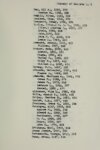
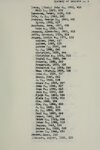
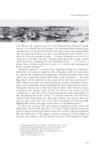
Show BOOK REVIEWS the bloody quarrel seemed inevitable, but what was not so inevitable was that it would be this good and this complete in its coverage of the Mormon experience with the national travail. While E. B. Long’s The Saints and the Union (1981) dealt principally with events and issues within Utah Territory and its western environs during the war, and Margaret Fisher’s 1929 book satisfied genealogists, Kenneth Alford has collected nineteen scholarly essays that delve into virtually every aspect of the conflict’s connections to Mormon life and thought, from Lincoln’s relationship with the Mormons (Mary Jane Woodger) to a reprint of the late Harold Schindler’s revisionist analysis of the Bear River Massacre (with an addendum by Ephriam Dickson). In brief, the volume gives much truth to the cliché about “leaving no stone unturned.” At the end of the essays, Alford appends three documents edited by William MacKinnon on Civil War strategies “Rooted in Utah” and then an exhaustive, and eminently usable, bibliography. After a brief analysis of the work of Camp Douglas photographer Charles Beckwith (Ephriam Dickson), there follow almost one hundred fifty pages devoted to identifying hundreds of Latter-day Saints who qualified for the title of “Civil War Veterans,” nearly a fifth of them Confederates. The appendices present not only genealogical and sometimes biographical data on the soldiers but also a painstaking description of research methods that led to their identification. Although not a few of them became Mormons after the war and many were members of Lot Smith’s mounted company protecting the Overland Trail, the findings perhaps challenge the common notion that only a handful of Latter-day Saints served in either contending army. As a genealogical tool alone, Alford’s volume would be worth the price, but the rest of the book presents enough information and riveting analysis to double its value. For readers familiar with the history of nineteenth-century Utah, there are few surprises in the collection of essays, particularly with reference to Mormon ambivalence and virtual neutrality during the hostilities. Apostle John Taylor declared during the early days of the war, “We know no North, no South, no East, no West,” a statement that provided Richard Bennett with a title for his contribution on Mormon interpretations of the war (100). Actually, Taylor’s remark was among the mildest of the hierarchy’s condemnatory comments about the United States. “The destruction of the nation is sealed,” proclaimed Heber Kimball (97). His friend Brigham Young’s near delight with the apparent dissolution of the Union and his visceral dislike for Abraham Lincoln, whom he considered “as weak as water,” helped fuel his apocalyptic vision of the conflict, his belief in the justice of the war’s carnage, and his hope that the isolated saints could stay essentially aloof from it all (69). Other essays nevertheless demonstrate that the war had inexorable effects on Young’s followers and their homeland in the West. The establishment of Camp Douglas, chronicled by William 193 |