| OCR Text |
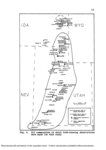
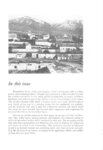
Show ^95 Utah Historical Quarterly sion of Mormon society moving at its own pace under what may be called popular volition rather than the product of colonizing missions. Similarly, natural forces shaped the appeal Bear River made to Idaho's frontiersmen. The river's banks and surrounding terrain held little gold or silver. So, the region was bypassed by the frenzied rushes, camps, and mining development of the era. Except for the traffic from Utah to the mines in northern Idaho and Montana, transportation also skirted the region until the 1880s when the main stream of east-west travel finally pushed the Oregon Short Line Railroad through it. On the other hand, prospects did exist for government positions, trade, livestock, and timber and land speculation; but such opportunities attracted a smaller, more stable society than did the great mining and transportation bonanzas. Thus, settlement of the Bear River was part of both the Mormon frontier and the broader frontier of the West but lacked certain aggressive elements that characterized settlement in other regions of each frontier.5 To trace this process of competing settlement with a bit more detail, it may be noted that Mormon colonization edged north toward the Bear River from the earliest times. But hard winters that froze government stock in 1850 and LDS church herds in 1855 and the outbreak of the Utah War in 1857 slowed northward movement. In the nearest thing to a land boom that early Utah history can boast, Mormon settlers rushed into southern Cache Valley in the years after the Utah War.G Land hunger notwithstanding, habit and the threat of Indians caused them to settle in a pattern entirely consistent w7ith established Mormon procedure. Soon, villages laid out in the characteristic Mormon grid were located at the canyon openings along the south and east portions of the valley. Franklin, now in Idaho, was the most northerly of these early towns. Irrigated farms lay in small plots adjacent to each town, the habits of irrigation were instilled among the settlers, and canal systems were etched in the landscape. Hay grounds and grazing commons extended beyond the village fields, but the presence of hostile Indians apparently curtailed expansion farther north and w7est.7 Developments after 1863 radically altered the picture. On a bitter January morning Col. Patrick E. Connor massacred some three hundred Indians in the so-called Battle of Bear River, and a rich mining boom in northwest Idaho and Montana provided markets for Utah produce and created a business in freighting and trade in which Mormons and non° ° 5 l t h e . M o r m o n colonizing mission see Charles S. Peterson, Take Up Your MissionMormon Colonizing along the Little Colorado River, 1870-1900 (Tucson: University of Arizona Press, 1973), especially pp. 38-62. |