| OCR Text |
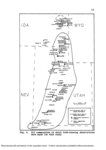
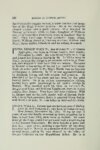
Show Valley of the Bear River 211 This process of cultural diffusion began in Idaho, but after federal land laws became applicable in 1869 it penetrated U t a h as well. By 1874 disenchanted Mormons began to move out of Cache Valley's towns to homesteads on the west side and elsewhere. Responding to the freight road that crossed into the valley at Beaver D a m and moved along the west side toward Oxford, many settlers located near the road in what became a string settlement. Others located in farming districts at Petersboro, Trenton, Cornish, Lewiston, and the railroad stop of Cache Junction. 39 Even in the south of the valley, one observer commented that villages lay with scattered homesteads extending from them along roads and section lines like arms reaching from one town to embrace the other. 40 In time the trend to scattered homesteads got an unexpected lift from the L D S church itself. This occurred under the aegis of Brigham Young College which for many years held forth in Logan. Endowed by a land grant of 9,600 acres in the bottom of the southern part of Cache Valley, the college first secured revenues by leasing land to individual farmers and later by selling the land to them outright. 11 This practice resulted in the establishment of scattered farming districts in southern Cache Valley. Not surprisingly the southward spread of the homestead system did not stop in Cache Valley. How7ever, the impact of change was much greater in the northern parts of Utah than in the south. As geographer Wayne Wahlquist has shown, competition w7ith the village system was always strong in the Wasatch Front counties. With homesteading's advent, the new system was superimposed upon the old village communities, the process of which Wahlquist has traced in Brigham City, Kaysville, and American Fork. 12 South of Provo the federal land system's impact was much less apparent. Although homesteading w7as a common practice there, as it was in the north, it did not alter the village system as noticeably. Sanpete 39 This development is treated in A. J. Simmonds, On the Big Range: A Centennial History of Cornish and Trenton . . . 1870-1970 (Logan: U t a h State University Press, 1970) ; and in A. J. Simmonds, The Gentile Comes to Cache Valley: A Study of the Logan Apostasies of 1874 and the Establishment of Non-Mormon Churches in Cache Valley, 1873-1913 (Logan: U t a h State University Press, 1976). 40 Philip S. Robinson, Sinners and Saints (Boston: Roberts Brothers, 1883), p. 141. 41 This topic is treated in two papers prepared at U t a h State University by Ronald O. Barney, "Mormon-U.S. Government Interaction over Land Policies, 1847-1860," a copy of which is in my possession; and John A. Hansen, " T h e History of College and Young Wards, Cache County, U t a h , " Special Collections, U t a h State University Library. 12 Wayne L. W^ahlquist, "Settlement Processes in the Mormon Core Area, 1847-1890" (Ph.D. diss., University of Nebraska, 1974), especially chap. 5 ; also see Wayne L. Wahlquist, "Population Growth in the Mormon Core Area: 1847-90," in Jackson, The Mormon Role in the Settlement of the West, pp. 107-34. |