| OCR Text |
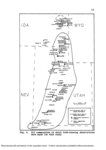
Show 122 Utah Historical Quarterly 1871. From Wheeler's report it is obvious that he was much more impressed with the Mormons than with the environs.38 During the next two decades, the primary non-Mormon economic force in the area continued to be mining, which would bring steamers up the Colorado to the mouth of the Virgin River for salt and produce.39 Gold at nearby Silver Reef and in neighboring Nevada brought some ephemeral markets to Dixie Mormons.10 However, in general, the region remained isolated from the mainstream of American history. Post-Civil War America produced a lot of dreamers and entrepreneurs—John D. Rockefeller, Andrew Carnegie, Edward Harriman, to name a few. Further west a man by the name of Frank Brown dreamed of running a railroad from Denver to Grand Junction, Colorado, and then down the Colorado River to the Gulf of California with a trunk line to San Diego and the Pacific. And while he envisioned cargoes of agricultural goods, minerals, and paying passengers, one of his major freight items would be coal. Californians needed Utah energy even then, and so did Japan. Brown planned to reach Utah's coal-laden Kaiparowits Plateau with a trunk line from the mouth of the Virgin and upriver through St. George to the coal fields. But Frank Brown drowned in Marble Canyon in 1889. His chief engineer, Robert B. Stanton, tried to continue the project, but could not do it.11 What a scheme though, and if one changes railroad tracks to power lines, the project has a modern quality. Mormons had their dreamers also, and certainly most, if not all, of the early Dixie Saints dreamed of having a railroad there. George A. Smith, church leader for the southern colonies, proposed running a railroad south from Nephi into Sevier Valley, then to Kanab and the North Rim of the Grand Canyon where a suspension bridge would cross the canyon. Then tracks would continue south to join the Southern Pacific's main line along the Gila River.12 Some dream! This review of non-Mormon forces affecting Utah's Dixie is incomplete; nevertheless, the major elements have been outlined briefly. For a number of reasons their impact on Mormons in the region was less "s George M. Wheeler, Report upon Geographical and Geological Explorations and Surveys West of the One Hundredth Meridian, 6 vols. (Washington, D . C , 1875), 1 : 1 5 1 - 6 3 ; and George M. Wheeler, Preliminary Report Concerning Exploration and Survey Principally in Nevada and Arizona (Washington, D . C , 1872), pp. 1-20. 39 See Phoenix, Arizona, Gazette, April 10, 1895, in which John A. Mellon discusses his river experiences; and Lingenfelter, Steamboats. 40 Alfred Bleak Stucki, "Historical Study of Silver Reef, Southern U t a h Mining T o w n " (M.A. thesis, Brigham Young University, 1966). "'Dwight L. Smith, "Robert Stanton's Plans for the Far Southwest," Arizona and the West 4 (1962) : 369-80. 42 Letter of George A. Smith, December 2, 1874, in Daily Union Vedette, October 9, 1875. |