| OCR Text |
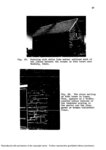
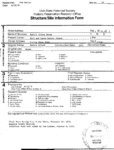
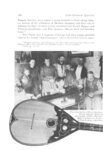
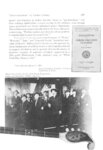
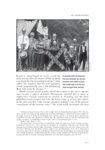
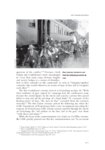
Show "Americanization" of Carbon County 185 Principe Di Napoli ("Prince of N a p l e s " ) , Castle Gate (1902) ; Fratellanza Minatori ("Miners Brotherhood"), Sunnyside (1902) ; and Societa Cristoforo Colombo ("Christopher Columbus Society"), Castle Gate (ca. early 1910s). T h e Slovenska Narodna Podporna Jednata ("Slovene National Benefit Society"), affectionately called the "Snappy J," served Slovenes in Carbon County. (The Slovenian National H o m e in Helper still functions and serves as a testimony to the importance of such groups.) Croatian lodges were also founded in the county, as well as lodges of the Jugoslav Socialist Federation. These organizations were formed to help mitigate the problems of employment in an industrial society. Some functioned as types of labor unions, while others, such as the Jugoslav Socialist Federation and branches of the Italian Socialist Federation in Scofield and Clear Creek, were political. Economic and artistic needs were served by various groups. Greeks also had organizations—Pan Hellenic Unions—fostered by Greece to nourish the idea of repatriation. 1 ' T h e immigrants sought to maintain various customs and traditions while making a living in Carbon County. Italians were either accompanied by or h a d sent for wives earlier; but by 1910-17 Greeks, South Slavs, and Japanese were taking picture and "mail order" brides from their respective nationalities, with some returning to the homeland to marry. Weddings, funeral processions, open-casket viewings, and the memorial wheat of the Greeks were important customs celebrated in traditional ways. Ethnic foods simmered in all parts of Carbon County. "American" children w 7 ondered in horror why pork entrails were being cleaned on public w7ater spouts. Yet, outdoor ovens in Helper summoned many a child, of immigrant parentage or otherwise, to indulge in a piece of homemade bread after school. 14 Folk beliefs continued in many households. Belief in the occult and in folk cures was especially significant and most often transmitted by the women. T h e mal occhio or "evil eye"—the idea that h u m a n envy could 11 Philip F. Notarianni, "Italian Fraternal Organizations in U t a h , 1897-1934," Utah Historical Quarterly 43 (1975) : 172-87; Joseph Stipanovich, "Falcons in Flight: T h e Yugoslavs," Peoples of Utah, pp. 3 7 0 - 7 1 . Evidence of the existence of the Italian Socialist Federation is found in issues of 77 Proletario (New Y o r k ) , June 26, 1904, and October 30, 1904, on microfilm, Immigration History Research Conter, University of Minnesota, Minneapolis. State locals were listed, U t a h having two branches where one R. Anderlini apparently served as president. Information on the Slovenian National Home, listed on the U t a h State Register of Historic Sites, is located at the preservation office, U t a h State Historical Society. Also see Helen Z. Papanikolas, " T h e Exiled Greeks," Peoples of Utah, pp. 417-18. 44 Papanikolas and Kasai, "Japanese Life in U t a h , " Peoples of Utah, p. 342; Papanikolas, Toil and Rage, pp. 139-42, 1 5 1 ; Joseph Stipanovich, The South Slavs in Utah: A Social History (San Francisco: R&E Associates, 1975), p. 7 5 ; Lucile Richens, "Social History of Sunnyside," M S A211, WPA Collection, U t a h State Historical Society; interview with Al Veltri, December 18, 1971, Helper, U t a h , by Philip F. Notarianni and A. Kent Powell, American West Center, University of U t a h . |