| OCR Text |
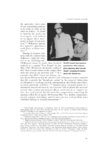
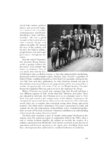
Show Book Reviews and Notices coaxed to boil by lifting a lid off the stove, bread rising in a p a n set on a chair, the everlasting dishpan hanging on the wall. T h e kerosene lamp and the sad iron are not shown, but any ranch wife can tell you that they are there, just out of camera range. Today, thanks to "wash and dry" the ranch children seem more comfortably dressed 333 than formerly and their mother has time to attend the P T A meeting before rushing home to create a gelatine pudding complete with packaged topping. There is no doubt about it, progress has its advantages. VIRGINIA N . PRICE Price. Utah New Mexico Populism: A Study of Radical Protest in a Western Territory. By ROBERT W. LARSON. (Boulder: Colorado Associated University Press 1974. xiv + 240 pp. $10.00.) Robert Larson's New Mexico Populism is a welcome addition to the field of territorial political history in the American West. T h e book is as m u c h a treatment of the entire political scene in New Mexico during the 1880s and 1890s as it is an in-depth analysis of the Populist party in that territory. And therein lies its chief strength. For those who are familiar with the Populist Revolt and the varying historiographic interpretations surrounding it, this book will provide few surprises. Larson is the latest among a growing group of scholars who, during the last fifteen years, have undertaken serious studies designed to rescue Populism from the assaults of the revisionists who saw the movement as a rather crude and naive attempt to deal with problems of depression and frustration through panaceas and scapegoat politics that were tainted with anti-Semitism and nativism. T h o u g h Larson views the "crusade" as generally positive and enduring, he avoids the temptation for historical overkill by refusing to become bogged down in the futile and presentistic argument over whether a third party, composed mainly of rural farmers, miners, and laborers, bore traits of incipient European Facism — or perhaps Marxian Socialism — and Hitlerian anti-Semitism. T h e seeds of Populism were sown on flinty soil in New Mexico Territory. For "with New Mexico's Territorial Government so much under the t h u m b of the federal government and so heavily dependent upon Washington for helpful legislation and subsidies, . . . the well-known hostility of the Populists toward Washington would make the People's Party appear as a major threat to the growth of the prosperity of the Territory in the minds of many New Mexico citizens." But, as in other areas such as the Great Plains and the South, conditions were severe enough to impel farmers and small stockmen to form alliances in the late 1880s that would eventually seek the third party outlet during the 1890s in spite of the political inopportunism of doing so. New Mexico Populists, like most of their counterparts, were believers in the "unity of producing classes," spurned all but the most peripheral manifestations of nativism (e.g., alien ownership of l a n d ) , and favored free coinage of silver but not until the mid-1890s did they do so to the exclusion of other reforms as defined in the O m a h a Platform. And though somewhat eccentric they were generally positive and progressive in their orientation. In New Mexico, however, the Populists won no important elections; nor were any elective or appointive offices held by members of the Populist party. So the; question may fairly be asked, why did the author devote this m u c h time |