| OCR Text |
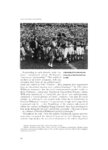
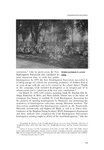
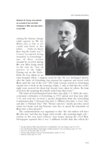
Show UTAH HISTORICAL QUARTERLY right or wrong on this occasion. This celebration could only happen in America. Nowhere else in the world could men who fought as bitter foes fifty years ago meet and clasp hands in brother love as they are doing here.”72 Ohio’s governor, James M. Cox, promised the veterans that “today your names pass into the world’s great hall of fame—Yank with Johnny, blue with gray—to be revered as long as time endures.”73 In complimenting the assembled veterans, Governor Eberhart of Minnesota received sustained laughter when he said, “What an indescribable pleasure must be experienced by Vice President Marshall, who presides over the Senate, and Speaker Clark, who presides over the House, to come here and look into the faces of so many honest men.”74 Governor Mann of Virginia observed that good feelings were being engendered by the reunion and noted that on that day there was “no north and no south, no rebels and no yanks . . . [only] one great nation.”75 The highlight of July 3 came with the reenactment of Pickett’s charge by veterans who participated in the original charge—survivors of General George S. Pickett’s Division and the Union Philadelphia Brigade who manned the stone wall opposing them. The Confederate veterans that day were but “a handful of men in gray,” as they marched once again over the field they had charged as youthful soldiers. This time, though, “there were no flashing sabers, no guns roaring with shell, only eyes that dimmed fast and kindly faces behind the stone wall that marks the angle. At the end, in place of wounds or prison or death were handshakes, speeches and mingling cheers.” The Confederates marched over a quarter mile that day, not as enemies, but as friends, and embraced Union veterans as citizens of a united country. “They crowded over the stone wall, shook hands and the charge was over.”76 One Utah veteran, William Bostaph of the 103rd Pennsylvania Infantry Regiment, recorded his impressions of the reenactment in a letter to his wife Edith.77 “Yesterday I spent the day at the point where Pickett’s charge culminated, a little spot of perhaps four acres on which was decided by a few hundred men the question whether this was one country or a divided one. . . . How little we realized at the time the tremendous issue at stake on 72 “Charge Again at Bloody Angle,” Salt Lake Herald-Republican, July 4, 1913. Ibid. 74 “Pickett’s Charge,” July 4, 1913. 75 “Forty Thousand Veterans Meet on Battlefield,” Salt Lake Herald, July 1, 1913. 76 “Bloody Angle,” July 4, 1913. 77 William M. Bostaph was a civil engineer who was unanimously elected as president of the Ogden Chamber of Commerce in 1909. He was extremely active in the Grand Army of the Republic, serving, at one point, as commander of the Utah Department. In 1909, during the GAR National Encampment in Salt Lake City, Bostaph was elected “Senior Vice-Commander-in-Chief ” of the national organization—the only Utahn to hold a national GAR office. “Encampment of the GAR,” Ogden Standard Examiner, May 22, 1903; “William Bostaph Returns from Arizona,” Ogden Standard Examiner, May 24, 1905; “Utah State News,” Davis County Clipper (Bountiful, UT), April 16, 1909; and Journal of the Fifty-Fifth National Encampment Grand Army of the Republic (Washington, D.C.: Government Printing Offices, 1922), 269. 73 282 |