| OCR Text |
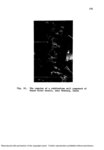
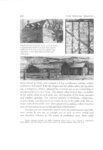
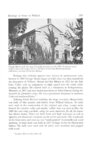
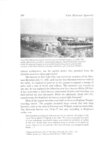
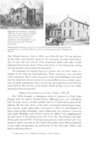
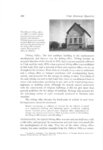
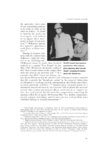
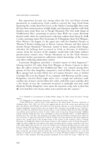
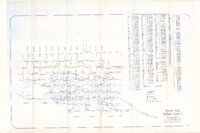
Show WINTER 2013 UHQ pp 4-90_UHQ Stories/pp.4-68 12/5/12 9:38 AM Page 8 Overview Map, Second Powell NATHAN L. NELSON Expedition (1870–1873). source.” Young concluded, “Though we do not understand the combination, nature, and action of those elements, we can see their results.”14 Thus, Powell’s 1870 scouting trip first brought him into contact with two men directly connected to the Mountain Meadows Massacre, John D. Lee and William Dame, and Jacob Hamblin, a witness in the case. Powell found the Mor mons—regardless of their possible connection to the massacre thirteen years earlier—to be highly useful in pursuit of his goal to fill in the blank spaces on the map. The following year, 1871, marked the commencement of that effort in earnest and brought Powell and his men into even closer contact with several massacre participants. Powell’s second expedition left Green River, Wyoming, on May 22, 1871. Of the eleven in his party, Powell was the oldest at age thirty-seven and the only one who had previously run the r ivers. Second in command—and second oldest at age thirty-two—was Powell’s brother-inlaw, Almon Harris Thompson, the party’s “chief geographer, astronomer and topographer.” Men as young as eighteen and no older than thirty-one comprised the remainder of the party. Most had some training or talent— surveying, topography, photography, or art—that made them useful on the journey.15 To permit additional time for gathering scientific data, Powell divided the second journey into two parts: from Green River, Wyoming, to the Paria River below Glen Canyon in 1871, and from the Paria, through the Grand Canyon, to the mouth of the Virgin River in 1872. The 1871 journey proceeded more slowly than planned. Although the group had left 14 Brigham Young, September 25, 1870, in Journal of Discourses, 26 vols. (Liverpool: F. D. Richards, etc., 1854–1886), 13:248–49. 15 Worster, River Running West, 219–20. 8 |