| OCR Text |
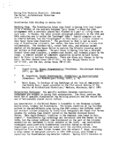
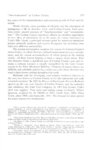
Show Book Reviews and Notices 217 The Road to California: The Search for a Southern Overland Route, 1540-1848. By HARLAN H A G U E . American Trails Series, no. 11. (Glendale, Calif.: A r t h u r H . Clark Company, 1978. 325 p p . $20.50.) As we read this book, we learn that there were many roads to California. If a person headed west from almost anywhere above north-central Mexico and south of the Forty-second Parallel, he might h a p p e n upon a road, a trail, or a footpath that would lead to California. Of course, the a u t h o r concentrated mainly on the roads t h a t led from northern Mexico and New Mexico to the Californias in an effort to tie the interior provinces into a more closely knit unit. T o provide a setting for the developm e n t of his principal theme, the author discusses the Indian peoples w h o occupied greater Arizona in the centuries before the arrival of the EuropeanAmericans. I n some instances where an anthropologist might tend to qualify statements concerning the origins of I n d i a n peoples, the a u t h o r was quite definite. As an example: "Descended from the H o h o k a m are the Papagos who live in the deserts of southern Arizona and the Pimas who live farther north. . . ." It was along I n d i a n footpaths and trails that Cabeza de V a c a and Estevanico m a d e their way across the southern United States to the meeting with Spaniards in northern Mexico in 1536. T h r e e years later, Estevanico, I n d i a n guides, and Fray Marcos de Niza m a d e their a p p r o a c h to the Seven Cities of Cibola. In the early 1540s, Fray Marcos and other I n d i a n guides led members of the C o r o n a d o expedition along trails that crisscrossed the southern part of w h a t is now the southwestern United States: north to the Hopi villages and the G r a n d C a n y o n ; east to the buffalo plains; west to the lower Colorado region; and then the melancholy return back home to Mexico, empty-handed, without having discovered another Mexico or another Peru, T h e Spaniards refused to give u p . T h e failure of the C o r o n a d o expedition was soon forgotten. After a lapse of time, new leads from I n d i a n inhabitants of the northern interior resulted in the formation of new expeditions. Failing to discover precious metals, the Jesuit and Franciscan missionaries found Indians w h o lived in villages and rancherias, practiced irrigation agriculture, and needed preachers to lead them from their "heathen ways" to Christianity. Kino, the Jesuit, and Garces and Escalante, Franciscans, deserve to be called explorers and pathfinders as m u c h as Anza, Miera, Armijo, and Romero, w h o were Spanish and Mexican civil and military leaders. All h a d a role to play in the establishment of the road to California. It is interesting t h a t the quarter-century of United States involvement in the Southwest takes about as m u c h space in the books as the three centuries of Spanish and Mexican involvement, but with the coming of the Anglo trappers a n d the events related to the Mexican War, the pace did quicken. F r o m the mid-1820s to the mid-1840s, there were few streams in the Southwest t h a t h a d not been trapped or crossed by such m e n as Jedediah Smith, the Patties, Ewing Young, Kit Carson, Antoine Leroux, Pauline Weaver, Antoine Robidoux, etc. Stephen W. Kearny and Alexander W. D o n i p h a n with their Dragoons, and Philip St. George Cooke with the Morm o n Battalion, all are familiar to historians and history buffs of U t a h a n d the West, a n d all started on the road to California: Kearny westward along the length of the Gila River; Cooke south into Sonora, then north along the San Pedro and Santa Cruz rivers, then westward along the Gila behind K e a r n y to the Colorado Crossing into California |