| OCR Text |
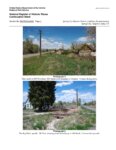
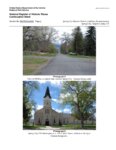
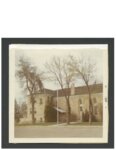
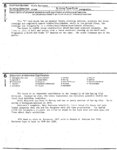
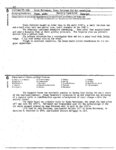
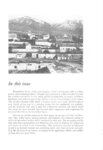
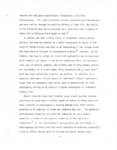
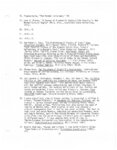
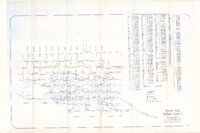
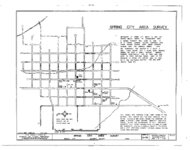
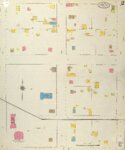
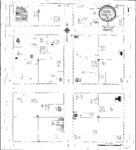
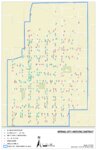
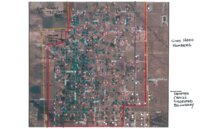
Show FHR-8-300A (11/78) UNITED STATES DEPARTMENT OF THE INTERIOR HERITAGE CONSERVATION AND RECREATION SERVICE NATIONAL REGISTER OF HISTORIC PLACES INVENTORY - NOMINATION FORM CONTI NUATION SHEET ITEM NUMBER 8 PAGE 4 Spring City continues to communicate visually the structure of the nineteenth century Mormon village. 10 The guiding principles of Joseph Smith's "Plat of Zion" are openly in evidence. The geometry of the gridion provides the overriding blueprint for the plan. The five acre town blocks are subdivided into lots of roughly an acre and a quarter. Town lots contain dwelling house, barns, granaries, orchards, and vegetable gardens. Wide streets are the rule, with the older houses following a uniform "set back" of fifteen to twenty feet. Architecturally, the town is dominated by the L.D.S. meetinghouse, centrally located on Block 20. Vernacular domestic architecture predominates with a large number of the homes of native limestone. Non-contributory buildings do exist, but development of the town has been slow during the twentieth century and the post-1950 intrusions do not detract from the historical nature of the town. Many outstanding architectural examples continue to be inhabited and maintained by town residents. -^-Inventory of the County Archives of Utah; No. 20, Sanpete County (Salt Lake City: Utah Historical Records Survey, 1941), p. 11. ^Milton R. Hunter, Brigham Young, the Colonizer (Independence, Mo.: Zion's Printing and Publishing Company, 1945) p. 251. ^See, W. H. Lever, History of Sanpete and Bnery Counties (Qgden, Utah: W. H. Lever, 1848). ^Daughters of the Utah Pioneers of Sanpete County, Utah: These . . . Our Fathers (Springville, Utah: Art City Publishing Company, 1947), p. 72. 5John W. Reps, Town Planning in Frontier Merica (Princeton, N.J.: Princeton University Press, 1969).————————— ^Dolores Hayden, Seven American Utopias; The Architecture of Communitarian Socialism, 1790-1975 (Cambridge, Mass.: MIT Press, 1976), pp. B-31. 7Joseph Smith, History 'of the Church of Jesus Christ of Latter-day Saints, Penid I; History of Joseph Smith the Prophet, by Himself, ed. B. H. Roberts (Salt Lake City: 1970), I, pp. 355-359. ^See Richard H. Jackson and Robert Layton, "The Mormon Village: Analysis of a Settlement Type," The Professional Geographer, 28:2 (May 1976), pp. 136-141; also Hayden, Seven American Utopios, pp. 110-118. ^Richard Prancaiviglia. "The Mormon landscape: Definition of an linage in the American West," Proceedings, American Association of American Geographers, 2(1970), pp. 59-61. l°Cindy Rice, "Spring City: A Look at a Nineteenth Century Mormon Village," Utah Historical Quarterly, 43:3 (Summer 1975), pp. 260-285. |