| OCR Text |
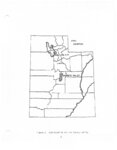
Show will also be strengthened and others will spread on the north to and beyond Ogden, so that when the emigration of this season should close there will be a continued line of villages, at short distances, for more than 200 miles in extent.8 The settlement objectives for 1850, then, were to bolster the initial settlement at Manti while beginning the task of establishing other towns to the north. These new towns would facilitate travel, communication, and supply within the valley and would also serve as an outlet for the increasing numbers of Saints flowing yearly into the Salt Lake Valley. An 1853 entry in Christian Nielson s diary explains the attraction of 1 the Sanpete area: It was stated that there was plenty of grass and forest at that country place [Sanpete] and there was a good opportunity for emigrants to get around and have a house erected at that place. The best ground around Salt Lake City was already divided out, or bought, and, of course, nearly everyone of ours did not have the dollars to buy with. Our oxen and other animals that belongs to us could likely find more grass to eat in San Pete than around Salt Lake City, where grass fields were limited. Further, it took three days to get a load of cut down trees taken from the mountains to Salt Lake City and a small load will cost $6. For the different reasons stated, it was recommended by our church authorities, and accepted by us, to journey down to Sanpete.9 After 1850 expansion in the valley was fueled by a steady influx of new settlers arriving from the northern Mormon colonies. The first settlement outside Manti occurred seven miles north at Pine Creek, later called Ephraim. Here Is@ac Behunnin, his wife, and nine children, spent the winter of 1852-1853 and in the spring started breaking ground for a farm. Also during this year, James Allred received permission to start a community several miles to the north of Behunnin's farm along Canal Creek at the present location of Spring City. The Saints at Allred's Settlement soon had constructed a small fort consisting of log cabins arranged in a square. Here, in the fall, came the first large company of Scandinavian immigrants. 63 Still further |