| OCR Text |
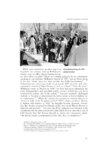
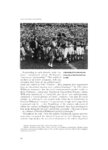
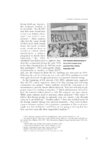
Show UTAH HISTORICAL QUARTERLY months earlier, a group of UTEP athletes had crossed picket lines protesting racism at the New York Athletic Club. When UTEP’s returning black runners were praised for breaking the boycott line, they began to reevaluate their position. The students decided not to participate against BYU because, they said, of BYU’s “belief that blacks are inferior and that we are disciples of the devil.” “As a reason for the track team’s boycott it may sound like a small thing to a white person,” commented the team captain, “but who the hell wants to go up there and run your tail off in front of a bunch of spectators who think you’ve got horns.”43 UTEP suspended the seven athletes but also responded to BYU.44 “Without any suggestion at all of trying to run your business,” UTEP President Joseph M. Ray wrote to Wilkinson, “I think your institution will be a thorn in the side of the [Western Athletic] Conference until such time as you recruit at least a token Negro athlete. Until you do, all explanations that the charges are not true will not carry the ring of conviction.” 45 “[M]ay I inform you,” Wilkinson responded, “that . . . all Negroes who apply for admission and can meet the academic standards are admitted.”46 By this time, Wilkinson had also received word that the U.S. Department of Health, Education, and Welfare was sending a five-person team to BYU to “determine whether we are complying with the [1964] Civil Rights Act. This, in and of itself, did not disturb us,” Wilkinson recorded, “but we learned, unofficially, that we were the only university in this area to be visited in such manner, and that the committee was ‘out to get us.’” BYU trustees contemplated foregoing all federal research contracts. Wilkinson urged patience, but placed on temporary hold plans for a new multimillion-dollar sports arena, worried that if BYU were expelled from the WAC, it might not be able to sustain the large venue.47 Wilkinson soon found himself facing additional controversies. He met with staff to try to determine how best to handle a brewing imbroglio involving the musical group the Tijuana Brass. After signing a contract, the Brass had asked to bring with them a rhythm-and-blues band, the Checkmates, Ltd. Two BYU administrators previewed a Checkmates performance and, according to Wilkinson, “found their show to be filthy.” BYU informed the Brass that the Checkmates would not be invited; the Brass demurred; BYU released them from their contract. However, as some of the Checkmates were black, Wilkinson worried, “people are bound to jump to the conclusion that we cancelled the contract because they were 43 Craig Collisson, “The BSU Takes on BYU and the UW Athletics Program, 1970,” accessed October 27, 2011, http://depts.washington.edu/civilr/BSU_BYU.htm. 44 “Negro Athletes Boycott Track Meet with BYU,” Ames Daily Tribune, April 13, 1968. 45 Joseph M. Ray to Ernest L. Wilkinson, April 22, 1968, Wilkinson Papers. 46 Ernest L. Wilkinson to Joseph M. Ray, May 3, 1968, Wilkinson Papers. 47 Wilkinson, Diary, May 1, 1968; see also September 9, 1968. BYU announced plans for a new activities center—eventually named the Marriott Center—on September 17, 1968. 212 |