| OCR Text |
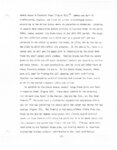
Show WINTER 2013 UHQ pp 4-90_UHQ Stories/pp.4-68 12/5/12 9:38 AM Page 88 uTAH HISTORICAL QuARTERLy Hathaway’s critics complained that he had run photographs of long hair and beards, favorable reviews of rock-and-roll groups, and discussions of the LDS church and blacks.146 When Hathaway’s replacement in April 1970 printed an article on racial prejudice, Wilkinson wrote to the chair of the publications board (who was also Dean of Fine Arts), “Will you please see to it that...when there are articles, they are somewhat buried by their location in the newspaper?”147 In response, the publications chair urged that students be allowed to “continue to publish student opinion that expresses viewpoints different from official opinion... and that [advisors] try to balance the same with opposite opinion of equal or superior weight and influence.” He believed that if administrators “muzzle every cry of student anguish and never give it a chance to be heard in the Universe [they could] expect it to be expressed in some other way–in an underground paper, or, heaven forbid, in more violent form.”148 Less than a month later, Wilkinson received a letter from the First Presidency cautioning him “against doing or saying anything which could be misinterpreted as an improper suppression of student thoughts and attitudes.”149 Wilkinson proceeded quietly to transform the Universe into a strictly “laboratory paper” headquartered in the Department of Communications.150 In referencing underground newspapers, BYU’s publications chair had in mind two recent publications. The single-issue Cuspidor told of BYU students “Dick Decent” and “Jane Birch,” whose conversation included, “Oh my goodness. Is it already time for me to go learn more about the great things our wonderful Military Industrial Complex is doing to keep that ever present danger, communism, for ever entering...these great United States?”151 From October 1968 to May 1969, Zion’s Opinion, a two-sided, single sheet, became one of the most successful independent student publications to surface at BYU. Containing articles and editorials praising a free press, Zion’s Opinion also provided readers with excerpts from the school’s 1966 re-accreditation report and other information not widely available.152 Concerned,Wilkinson asked an aide if there were “any legal action [that could Memorandum to Board of Student Publications, February 10, 1970, Perry Special Collections; “Full Support,” Daily Universe, February 10, 1970; “Gillespie Replaces Hathaway,” Daily Universe, February 16, 1970. 146 See Duncan, Memorandum to Wilkinson, February 17, 1970; Wilkinson, Memorandum to J. Elliot Cameron, October 1, 1969; Duncan, Memorandum to Cameron, October 16, 1970; N. Eldon Tanner, Letter to Wilkinson, January 16, 1970; Wilkinson, Letter to Tanner, January 17, 1970; Lorin F. Wheelwright, Memorandum to Wilkinson, January 14, 1970, all in Perry Special Collections. 147 Wilkinson, Memorandum to Wheelwright, May 7, 1970, Perry Special Collections. 148 Wheelwright, Memorandum to Wilkinson, May 22, 1970, Perry Special Collections. 149 First Presidency, Letter to Wilkinson, June 18, 1970, Perry Special Collections. 150 “Suggested Reorganization of Daily Universe” and correspondence between Heber G. Wolsey and Wilkinson, Perry Special Collections; “Editors Note,” Daily Universe, May 11, 1972; “Daily Universe Professionalized,” Daily Universe, July 26, 1972; “President Oaks Years,” Daily Universe, January 12, 1976; “The Daily Universe,” Daily Universe, September 5, 1978. 151 Cuspidor, n.d., Perry Special Collections. 152 Zion’s Opinion, October 18, December 5, 1968, March 17, 1969, Perry Special Collections. Zion’s Opinion began simply as Opinion, but by the third issue had added Zion’s. 88 |