| OCR Text |
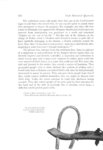
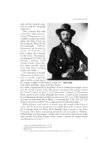
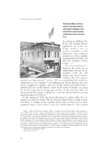
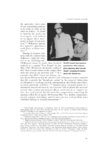
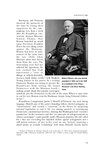
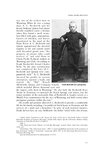
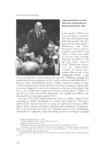
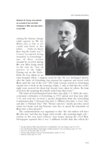
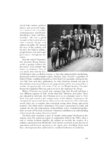
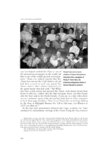
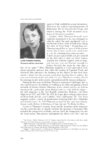
Show FALL 2013 UHQ pp 304-385_UHQ Stories/pp.4-68 9/16/13 1:25 PM Page 358 MANUSCrIPT, ArChIVES, AND rArE BOOK LIBrAry, EMOry UNIVErSITy UTAh hISTOrICAL QUArTErLy spent in Utah establish his sexual orientation. However, the radical experimentation of Bohemian life in Greenwich Village and Harlem during the 1920s included many forms of alternative sexualities. Further, while Thurman himself never explicitly mentioned it, he, too, belonged to what he called “the male sisterhood,” and he was known to have lovers of both sexes during his time in New York. 66 Regarding sex, Thurman urged West to “get rid of the puritan notion that to have casual sexual intercourse is a sin. It’s a biological necessity my dear. . . . I don’t say just saunter forth and give yourself to the first taker. I only say don’t repress yourself, nor violently suppress your sex urge, Louise Thompson Patterson, just because you are Pur itan enough to Thurman’s wife for a short time. believe that hell fire awaits he who takes a bite of the apple.”67 What Thurman regarded as a non-puritanical view about repression indicates that either his reading of Sigmund Freud and Havelock Ellis influenced his thinking on the subject or that their ideas struck a chord with his personal convictions, helping him to embrace his own sexual identity. In the end, while it is clear Thurman’s sexuality affected his marriage, its role in his creative and professional life remains ambiguous. During his first years in Harlem, Thurman experienced challenges, but he also enjoyed success. In addition to working as an editor and gaining a broad network of literary friends, Thurman wrote critical articles on African American life—particularly about Harlem’s role as a hub of black culture— for such magazines as the New Republic, Independent, Bookman, and Dance Magazine in 1927 and 1928.68 In 1929, he began ghost writing stories, many of them Irish, Jewish, and Catholic “true confessions” for True Story magazine under a variety of pseudonyms, including Ethel Belle Mandrake and Patrick Casey.69 In 1929 Thurman penned his first, and most famous, literary works: Harlem: A Melodrama of Negro Life and The Blacker the Berry. Central to Thurman’s thematic focus and the treatment of his characters was his conviction that art should celebrate the spectrum of humanity. This included the perspectives of blacks, and not solely the bourgeoisie, but also the black masses. This premise undergirded his efforts with Fire!! and ran 66 Van Notten, Wallace Thurman’s, 236–37. Nugent stated that he often slept on the floor under Thurman’s bed, while Thurman entertained his male guest overhead. 67 Wallace Thurman to Dorothy West, 1929, in Singh and Scott, Collected Writings, 172. 68 Mae G. Henderson, “Wallace Thurman,” in Encyclopedia of African-American Culture, ed. Jack Salzman (New York: Simon & Schuster and Prentice Hall International, 1996), 2659. 69 Hughes, “Harlem Literati,” 13; Therman B. O’Daniel, introduction to The Blacker the Berry, by Wallace Thurman (New York: Collier Books, 1970), xii–xiii. 358 |