| OCR Text |
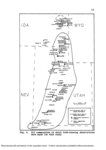
Show 218 a n d on to San Diego. D o n i p h a n and his m e n were sidetracked into C h i h u a h u a and finished the Mexican W a r there, without completing the journey to California. This is an attractive a n d durable book, such as we have come to expect from A r t h u r H . Clark C o m p a n y publishers. Selected illustrations, maps, bibliogra- Utah Historical Quarterly phy, and index supplement the text a n d m a k e this a volume that readers a n d libraries with a n interest in the Spanish, Mexican, and United States Southwest will w a n t to acquire. S. L Y M A N T Y L E R University of Utah The Southwest Expedition of Jedediah S. Smith: His Personal Account of the Journey to California, 1826-1827. Ed. by GEORGE R. B R O O K S . (Glendale, Calif.: A r t h u r H . Clark Company, 1977. 259 p p . $24.50.) This h a n d s o m e octavo volume, with its ivory laid, deckle-edged p a p e r a n d distinctive gold bands and p r o m i n e n t lettering on the spine, is clearly a "Clark book." Published in J a n u a r y 1978, in an edition of 750 copies, The Southwest Expedition of Jedediah S. Smith sold out within seven m o n t h s — a m o d e r n Clark record. A second printing, slightly more modest in a p p e a r a n c e , has since been issued. T e n years in preparation, tfiis valuable addition to the publisher's "Western Frontiersman Series" has been w o r t h the wait. D u r i n g the summer of 1967 Smith's personal account of his 1826-27 expedition turned u p in a box of family papers that h a d been given to the Missouri Historical Society in Saint Louis. T h e discovery h a p p e n e d almost as if on cue from Dale M o r g a n who, just four m o n t h s earlier, had publicly expressed his hope that additional early fur trade narratives might yet be found in the closets and attics of the " G a t e way City." Although Smith's accomplishments in the American West were well known, having been quite fully and accurately documented in the earlier works of Harrison C. Dale, M a u r i c e Sullivan, a n d M o r g a n , a m o n g others, certain points continued to stir debate and some questions remained unanswered, including the following: W h a t were Smith's motives in u n d e r t a k i n g the journey? W h a t was his real destina- tion? W h a t route exactly did his expedition follow? I t was the h o p e of George R. Brooks, longtime director of the Society, that the new d o c u m e n t might provide the answers. His expectations were only partially fulfilled. T h e exact route of J e d e d i a h Smith in 1826-27 can now be determined. H e left his Bear River rendezvous site in early August with a small contingent of between thirteen and eighteen men. After working his way south along the Price, Sevier, Virgin, and Colorado rivers, he reached the Mojave I n d i a n villages in mid-October. Smith then pushed west across the Mojave Desert a n d the San Bernardino M o u n t a i n s (through Sawpit C a n y o n ) , arriving at the Mission San Gabriel in late November — the first American to travel overland to California. After a trip to San Diego (to secure official permission from Governor Echeandia for his m e n to remain temporarily in the p r o v i n c e ) , which landed h i m in jail, Smith was released and reunited with his men. I n m i d - J a n u a r y his party left the mission, ordered to r e t u r n h o m e by the same route they h a d come. N e a r present-day Victorville, however, Smith veered to the Northwest, crossed the T e h a c h a p i Mountains, a n d entered the San J o a q u i n Valley. I n May, after his party h a d trapped some of the northern streams, he led two companions across the Sierra N e v a d a (through Ebbetts |