| OCR Text |
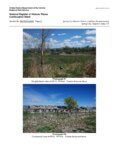
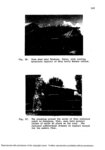
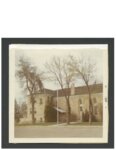
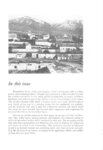
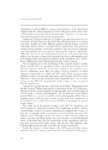
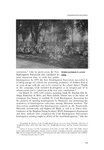
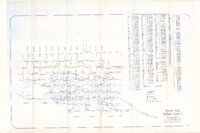
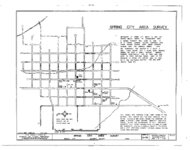
Show FHR-8-300A Cll/78) UNITED STATES DEPARTMENT OF THE INTERIOR HERITAGE CONSERVATION AND RECREATION SERVICE ^"piffipi NATIONAL REGISTER OF HISTORIC PLACES INVENTORY -- NOMINATION FORM CONTI NUATfbN SHEET ITEM NUMBER 7 PAGE 3 Landscape features also enhance the historic village feeling of the town. The town is isolated from the main valley by two low lying bands of hills (the "Stone Quarry Hills") on the west and south. Streets are generally tree lined and yards are maintained. Town lots contain orchards and vegetable gardens. Irrigation ditches still carry water to each water share holder in town. The rich cream-colored limestone used in the town's stone buildings blend in particularly well with the cultivated landscape. The adobe, brick, and frame buildings also harmonize well with the general setting. Natural features of importance are the two creeks which run through town. Canal Creek cuts through the extreme southwest corner of the town and Oak Creek runs in a northeasterly course bisecting^ the city. The .plentiful spring which gave the town its name is displayed prominently on block 32. The quality which serves to distinguish Spring City from other towns in the valley is the large number of buildings which appear much as they did in the years before the First World War. The pace of life and character of the people also enhance the historic atmosphere. The lack of large commercial establishments, the large number of vernacular style homes, the landscape setting, and the spectacular view of the Wasatch Plateau all contribute to the singularity of the Spring City experience. . H. Lever, History of Sanpete and Emery Counties (Ogden, Utah: W. H. Lever, 1898) . 2See, Lowey Nelson, The Mormon Village (Salt Lake City, University of Utah Press, 1952) and Wayne Wahlquist, "Settlement Processes in the Mormon Core Area, 1847-1890" (Ph.D. dissertation, University of Nebraska) . ^Cindy Rice, "Spring City: A Look at a Nineteenth Century Mormon Village," Utah Historical Quarterly, 43:3 (Summer, 1975) pp. 260-285. ^For a summary of architectural styles in Utah, see Peter L. Goss, "Utah's Architectural History," Utah Historical Quarterly, 43:3 (Summer, 1975), pp. 208-239. |