| OCR Text |
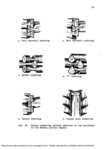
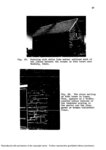
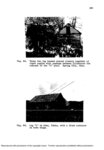
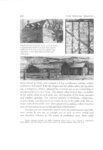
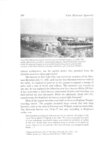
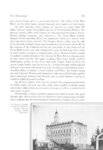
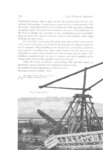
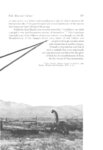
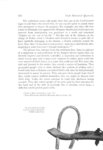
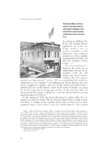
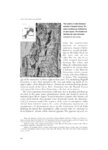
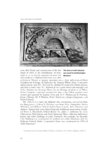
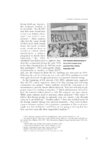
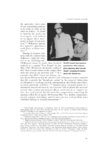
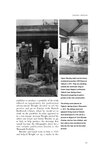
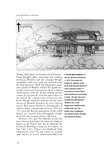
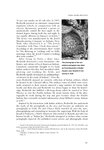
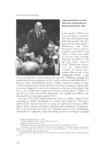
Show WINTER 2013 UHQ pp 4-90_UHQ Stories/pp.4-68 12/5/12 9:38 AM Page 50 uTAH HISTORICAL QuARTERLy Tools used in splitting oolite limestone using the plug and FLASSIG REINER ANd ANNA FROdESIAK feather method. wedges were to be used to break the stone free. Edward L. Parry, in a dark suit, and the quarry foreman in a vest stand next to stone newly broken loose and moved into position for lifting by the derrick. The stout pole der r ick consisted of a heavy vertical timber held in place by guy ropes. An inclined timber attached to the base of the vertical timber was hinged so that its distal end could move both hor izontally and vertically. A block-and-tackle assembly at the end of the inclined timber passed through pulleys from the end of the inclined timber to the top of the vertical timber and then to a winch. The winch, with a set of gears, was operated by hand. The lifting tongs, a scissor-like apparatus with a chain looped through the two handles and both ends, were attached to the block and tackle. As the chain was lifted by operation of the winch, the two hooks were pulled together to hold the block of rock securely. Once the rock was clear of the ground surface, the inclined timber could be swung horizontally to a desired location, and the rock lifted vertically so that it could be placed on a wagon or railroad car. The worker near the wagon holds the derrick tail rope to position the crane over the wagon being loaded. Two men at the vertical timber operate the winch for hoisting the stone. The chain tongs holds the stone suspended from the derrick as it is swung into place over the wagon. Various hand tools are held by other workers or scattered about including shovels, lever bars, picks, etc. The vertical timber stands today in the Ephraim quarry and the decayed remains of the inclined timber can still be seen. Manti, settled in 1849, Ephraim, settled in 1854, and Spring City, settled after much Indian trouble in 1859 were central to the development of the oolite limestone. Stonemasons, stonecutters, and quarrymen who had learned their trade from such diverse localities as Tennessee, New Hampshire, New York, Vermont, Denmark, Sweden, Wales, Canada, and England were among the pioneer settlers in each of these communities. 50 |