| OCR Text |
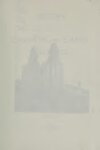
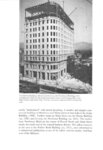
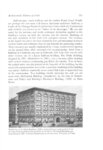
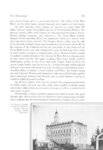
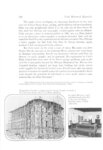
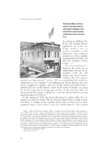
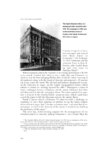
Show 226* Utah Historical Quarterly exhibited the style as did Frederick Albert Hale's Alta Club (1897) in Salt Lake City. Hale, active in the city at the turn of the century, originally came from Denver and received his architectural training at Cornell University. Salt Lake City's Commercial Club Building on Exchange Place by the firm of Ware and Treganza represents a more colorful and decorative example of the Italian palazzo. At the University of Utah a series of four brick and stone buildings (1901-2) by Richard K.A. Kletting adorn the old campus circle. They provide a subtle contrast to the later Neoclassical Park Building that terminates the vista looking east from Second South. Two commercial structures sheathed in terracotta paneling boldly display palazzo characteristics in downtown Salt Lake City: the Kearns Building (1910) and the Hotel Utah (1911). The Mathew H. Walker house (1906) on South Temple is one of the few residences in the style. The grand finale for Renaissance Revival in Utah was the completion of Kletting's winning design for the Utah State Capitol in 1916. Magnificently situated at the top of State Street, it is the most obvious architectural landmark in the Salt Lake Valley. The structure represents a fine combination of modern construction utilizing a reinforced concrete frame draped in a granite veneer of Classic and Renaissance symmetry. The copper-clad dome, inspired by Maryland's Statehouse at Annapolis and the United States Capitol, illustrates the talented designer's delicate sense of proportion. This building is the magnum opus of Kletting's long and highly successful architectural practice. Neoclassical. As if to compensate for the lack of nineteenth-century Greek Revival architecture, numerous examples of Neoclassical can be found in the state. Generally, buildings in this style are larger than the earlier Greek Revival and more simple than those of Beaux-Arts Classicism. Greek orders are frequently used, and pedimented porticos are common features. The 1893 World's Columbian Exposition and the 1901 Pan-American Exposition in Buffalo, New York, helped to popularize Neoclassical design, with McKim, Mead, and White again leading the way with their Pennsylvania Station in New York City. Early examples of the Neoclassical in Utah are confined to mansions, particularly those of Salt Lake architect Frederick Albert Hale: the Maclntyre house (1898), the Keith-Brown Mansion (1900), and the Salisbury Mansion (1905). Nonresidential buildings also exhibit the style wrell. Lacking a pedimented portico but incorporating other Classical features is the |