| OCR Text |
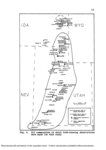
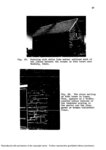
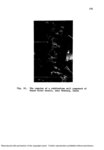
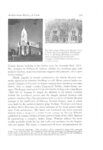
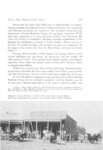
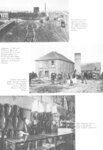
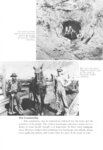
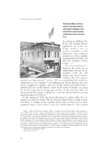
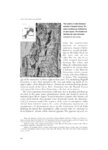
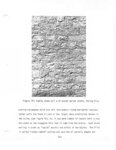
Show MORMON-CATHOLIC RELATIONS The Smith obituary struck exactly the right balance: approval of the life of a great man should not be mistaken for approval of his religion. Utah Catholics, in their quest for cordial relations with their neighbors, never fell into the error of grasping at superficial similarities to plaster over the gulf that in fact existed between Catholicism and other faiths. That point became quite clear in a 1902 Intermountain Catholic article reprinting a national story announcing that the church’s official position was to remain aloof from the Protestant crusade against Mormonism. It was a Catholic position from which neither of the other religions could have derived much comfort: “The Catholic Church stands alone, in magnificent isolation, from the jarring sects as they rise, wrangle, and decay. . . . In her eyes they are all the same—rebels against her divine authority, destroyers of Christian unity in the world, and teachers of false doctrines.”26 Nevertheless, within those well-defined theological limits, Mormons and Catholics found it possible not only to get along, but even to cooperate. Perhaps the most dramatic symbol of cooperation between the two faiths occurred in St. George in 1879. In the mid-1870s, what turned out to be rich silver deposits were discovered in the midst of sandstone strata some twenty miles northeast of St. George, and the ensuing rush to the site in 1876 created a non-Mormon mining town called Silver Reef. The geological anomaly of silver deposits in sandstone—a virtually unique phenomenon—was echoed by the equally anomalous social and economic phenomenon of a non-Mormon capitalist community in the midst of the Mormon agricultural towns of Washington County. Although the two communities regarded each other somewhat warily at the outset, it soon became apparent that they needed each other: the miners needed food, transportation, and building supplies, and the Mormons needed markets and money; as a result, a mutually beneficial symbiosis developed between them.27 The relationship between the Silver Reef Catholics, the largest religious group in the town, and their Mormon neighbors formed a component of that symbiosis. Scanlan had a particular interest in the Silver Reef Catholics even though, in those horse-and-buggy days, the almost three hundred miles separating them from Salt Lake City might reasonably have put them beyond all but the most sporadic pastoral care. Upon his first visit to Silver Reef, though, Scanlan discovered that most of the Catholics were former members of his Pioche, Nevada, parish who had followed the silver rush to Utah. Accordingly, beginning in January 1879, he hurriedly erected a church, a school, and a hospital. During his visits to Silver Reef, Scanlan boarded at the same hotel as John M. Macfarlane, a Latter-day Saint and the director of the St. George 26 Intermountain Catholic, April 19, 1902. The story of Silver Reef has been told numerous times, most recently in Gary Topping, “Another Look at Silver Reef,” Utah Historical Quarterly 79 (Fall 2011): 300–316, from which the passage that follows is derived. 27 241 |